About
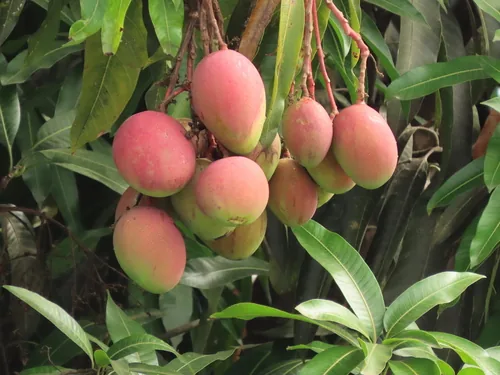
Mango is a large, evergreen tree native to South Asia, capable of reaching heights of 15-30 meters (50-100 feet). It has a dense canopy of glossy, dark green leaves and produces fragrant, small white flowers. The fruit is a fleshy drupe, varying in size and color, with a sweet, juicy, orange-yellow flesh surrounding a large seed. Mango trees prefer full sun and well-drained, slightly acidic to neutral soils rich in organic matter. They are drought-tolerant once established but benefit from regular watering during dry periods. Propagation is typically through grafting to ensure desirable fruit characteristics. Seed propagation is possible but may not produce true-to-type fruit. Grafting involves joining a scion from a desired variety onto a rootstock. Harvesting occurs when fruits mature and develop full coloration, usually in late spring to summer. Mature fruits emit a sweet fragrance and yield slightly to gentle pressure.
Permaculture Functions
- Edible: Mangifera indica fruits range from fiberless dessert types to tangy green pickles -- eat ripe fruit when shoulders fill and aroma peaks; sap and peel oils can blister skin on sensitive people during harvest.
- Medicinal: Bark, leaves, and kernel starches enter Ayurvedic protocols for digestion and skin -- food uses are safe at culinary doses; medicinal concentrates belong with trained practitioners.
- Wildlife Attractor: Bats and nocturnal moths pollinize panicles while ripe fruit feeds fruit bats and parrots -- bag panicles or harvest early if wildlife losses outpace kitchen gains.
- Windbreaker: Wide-spreading crown and leathery leaves blunt steady trade winds across paddocks -- prune for open vase shape so interior fruiting wood still gets light.
- Border Plant: Long-lived trunks mark property lines in frost-free regions -- space for equipment because buttressed roots lift pavement when planners underestimate mature spread.
Companion Planting
Also mentioned as companions:
- Citrus
Not yet profiled in PermiePortal
- None specified
Threats & Pressure