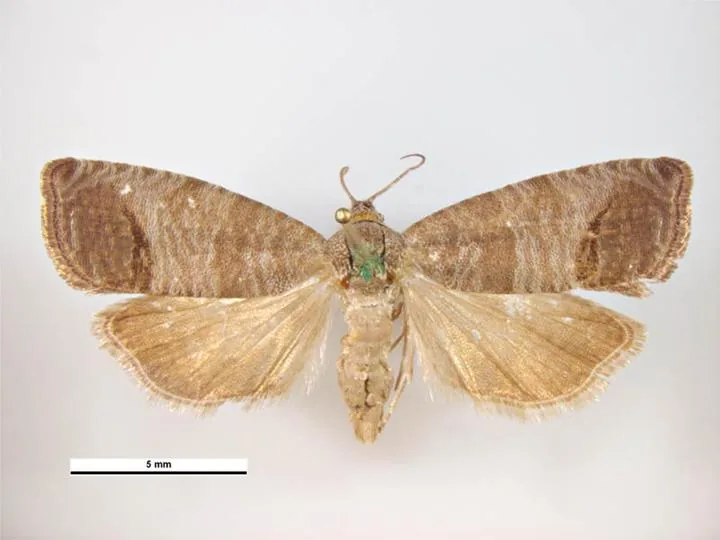
Field Identification
If new growth is curling, yellowing, sticky, or chewed, codling moth may already be on the plant. This pest often builds quietly, then damage appears all at once. Feeding stress weakens growth, reduces yield, and opens the door to secondary disease. Early cleanup is much easier than fighting a full population surge later.
Inspect the newest growth first: leaf undersides, flower buds, stem joints, and tender tips where pests gather. Look for body shape, color, eggs, cast skins, honeydew, webbing, or fresh puncture marks. A hand lens and a white paper tap test help reveal small life stages. Matching visible pests with fresh plant damage confirms active infestation.
Not sure what you have? Use the symptom diagnosis tool →
How to Deal With It
Organic Control Methods
Trichogramma egg parasitoids attack codling moth eggs before they hatch — release weekly during adult flight periods for best results. Codling moth granulosis virus (CpGV) is a naturally occurring virus that specifically kills codling moth larvae and is available as a commercial organic spray — one of the most targeted biological controls available for any pest. Parasitic wasps (Ascogaster and Bassus spp.) parasitize larvae inside fruit. Woodpeckers and other bark-probing birds hunt overwintering larvae in bark crevices. Support all beneficials by avoiding broad-spectrum sprays during bloom and maintaining diverse flowering plants at orchard edges.
Codling moth larvae tunnel into fruit leaving frass-filled entry holes — by the time you see damage the larva is deep inside and no spray reaches it. The entire management strategy must focus on the brief window between egg-laying and larval entry. Pheromone traps monitor adult moth flight — the first consistent catch date (biofix) starts your spray timing clock. Degree-day models from biofix predict egg hatch accurately. Remove all fallen and infested fruit immediately — larvae exit fruit to pupate in bark and soil, completing the cycle.
Corrugated cardboard bands wrapped around trunks in midsummer trap overwintering larvae seeking pupation sites — remove and destroy bands in late fall before adults emerge. Sanitation is critical: collect and destroy all drops every 2-3 days during the season. Prune for open canopy to improve spray coverage and reduce protected pupation sites. Mating disruption pheromone dispensers placed throughout the orchard confuse male moths and prevent mating — highly effective at orchard scale of 5+ acres and increasingly available for home orchards.
Individual fruit bagging with paper bags after petal fall completely excludes codling moth — highly labor intensive but highly effective for small plantings of high-value fruit. Corrugated cardboard trunk bands trap pupating larvae. Sticky red sphere traps plus codling moth lure bait captures adults for monitoring and modest mass trapping. Remove loose bark where larvae overwinter.
Codling moth granulosis virus (CpGV, sold as Cyd-X, Madex) is the gold standard organic spray — it specifically infects and kills codling moth larvae within hours of ingestion with no effect on anything else. Apply every 7-10 days from biofix through harvest, more frequently in hot weather as the virus degrades in UV light. Kaolin clay on fruit deters egg-laying and feeding — apply every 7 days and after rain. Spinosad provides knockdown of adults during peak flight. Neem oil disrupts egg-laying behavior.
Let Nature Handle It
Natural Enemies
- Parasitic Wasps
- Predatory Beetles
- Insectivorous Birds
Threat Map