Field Identification
If new growth is curling, yellowing, sticky, or chewed, rose slug may already be on the plant. This pest often builds quietly, then damage appears all at once. Feeding stress weakens growth, reduces yield, and opens the door to secondary disease. Early cleanup is much easier than fighting a full population surge later.
Inspect the newest growth first: leaf undersides, flower buds, stem joints, and tender tips where pests gather. Look for body shape, color, eggs, cast skins, honeydew, webbing, or fresh puncture marks. A hand lens and a white paper tap test help reveal small life stages. Matching visible pests with fresh plant damage confirms active infestation.
Not sure what you have? Use the symptom diagnosis tool →
How to Deal With It
Organic Control Methods
Birds -- especially robins and house sparrows -- and paper wasps consume rose slug larvae actively. Small parasitic wasps attack sawfly larvae in some regions. Mixed perennial borders with diverse bloom support generalist predators that keep rose slug populations in check. Rose slugs have 2-3 generations per year -- early season biological pressure on the first generation reduces the second and third. Avoid broad-spectrum sprays that collapse the beneficial insect community -- rose slugs rebound faster than their natural enemies after chemical disturbance.
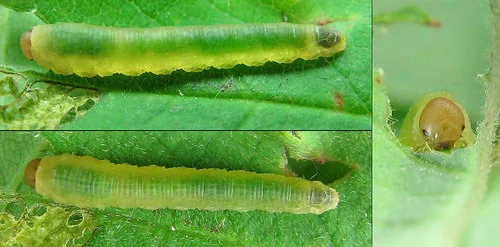
Rose slugs are the larvae of sawflies -- not true slugs. They are soft, pale green, and slug-like in appearance, feeding on leaf undersides and causing characteristic window-pane damage where the upper leaf surface remains intact while the lower tissue is consumed. By the time the skeletonized upper surface turns brown and papery the larvae may already be gone. Check leaf undersides weekly from late spring through summer. Multiple generations mean pressure continues throughout the growing season on roses.
Choose rugosa roses and other leathery-leaf types where they fit the design -- these tolerate light rose slug damage better than hybrid teas. Avoid overhead irrigation that keeps leaf undersides wet and creates ideal feeding conditions for larvae. Prune out heavily skeletonized canes on hybrid teas to stimulate clean new growth. Diverse plantings around roses support the generalist predator community that suppresses rose slug populations between spray applications.
Rub larvae from leaf undersides with a gloved thumb -- quick and effective for small plantings, kills larvae on contact. A forceful water spray from below dislodges early instar larvae onto soil where ground beetles and birds collect them. Check and repeat every 3-5 days during peak season since multiple generations hatch continuously.
Insecticidal soap kills rose slug larvae on direct contact -- coat leaf undersides thoroughly where larvae feed. Apply every 3-5 days while new hatch appears. Spinosad provides stronger activity and longer residual -- apply in the evening to minimize bee exposure. Neem oil reduces feeding when coverage is thorough and deters adult sawfly egg-laying. Apply at dusk to reduce UV breakdown and avoid pollinators on blooming rose varieties.
Let Nature Handle It
Natural Enemies
- Paper Wasps (Polistes spp.)
- Insectivorous Birds
- Ground Beetles (Carabidae)
- Parasitic Wasps (Hymenoptera)
Threat Map