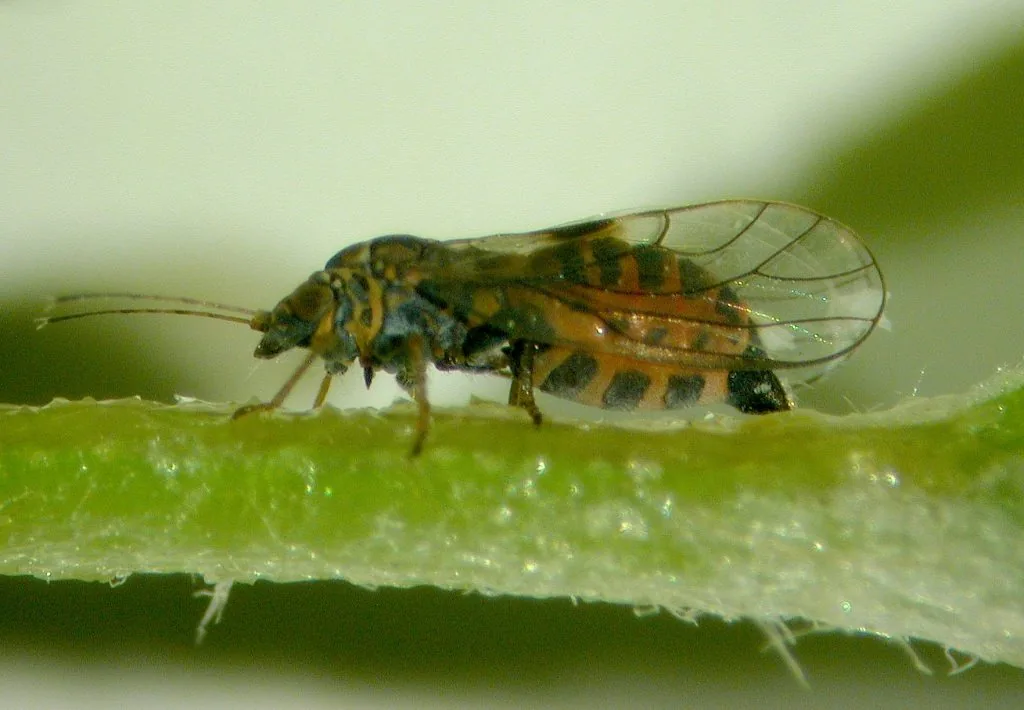
Field Identification
If new growth is curling, yellowing, sticky, or chewed, pear psylla may already be on the plant. This pest often builds quietly, then damage appears all at once. Feeding stress weakens growth, reduces yield, and opens the door to secondary disease. Early cleanup is much easier than fighting a full population surge later.
Inspect the newest growth first: leaf undersides, flower buds, stem joints, and tender tips where pests gather. Look for body shape, color, eggs, cast skins, honeydew, webbing, or fresh puncture marks. A hand lens and a white paper tap test help reveal small life stages. Matching visible pests with fresh plant damage confirms active infestation.
Not sure what you have? Use the symptom diagnosis tool →
How to Deal With It
Organic Control Methods
Adult pear psylla are jumpy, flat insects; their nymphs sit in cups of honeydew and sooty mold where lady beetles, lacewing larvae, syrphid larvae, minute pirate bugs, and earwigs can reach them if sprays do not wipe the roster first. Parasitic wasps attack nymphs in late spring and summer flushes -- you will see mummies when biocontrol is working. Plant flowering ground covers and mow strips so beneficial insects have pollen and shelter between pear rows. If you blanket-spray pyrethrin every week, you will farm psylla alone -- back off when predator counts rise.
Psylla overwinters as adults on bark and in orchard litter, then moves to swelling buds -- the first eggs appear when pears break dormancy. Walk rows weekly from silver tip through petal fall and flip new leaves to catch the first nymph wave before honeydew rains begin. Avoid heavy nitrogen that pushes endless soft flushes; each flush is a new nursery. Tie monitoring to degree days if your extension publishes local models so you are not guessing. Flag blocks that exploded last year and scout those first; psylla remembers good restaurants.
Train pears to an open vase or tall spindle so inner canopy dries and sprays reach leaf undersides -- psylla loves tight, humid pockets. Summer prune water sprouts that act as infinite salad bars. Strip the most infested shoots on young trees if the load is still localized; bag debris. You cannot rotate a pear tree out of psylla, but you can remove abandoned backyard pears nearby that act as untreated reservoirs. Wash dust off leaves in dry years; dusty foliage favors mites more than psylla, but both signal stressed systems.
Sticky trunk bands catch crawling wingless nymphs in some setups, but adults fly -- use bands as a minor adjunct, not the plan. Power-wash nursery whips before planting to knock overwintering adults. For backyard trees, a strong jet of water on new growth dislodges young nymphs before they settle into their sticky honeydew cups; repeat every few days during flush. Prune out the lowest suckers touching grass where adults rest. In high-tech plantings, overhead cooling misters timed for heat can slow nymph development; pair with disease scouting so you do not invent scab while fighting psylla.
Dormant or delayed-dormant narrow-range oil smothers overwintering eggs when labels allow pears -- timing is bud stage specific, read the pear section twice. Insecticidal soap and neem target soft nymphs, not adults under bark; spray when crawlers move onto fresh leaves and add a spreader for waxy pear foliage. Kaolin clay repels ovipositing adults if you keep uniform coverage through spring winds. Avoid spraying open flowers; shift to evening when bees are home. Rotate modes of action across generations so you do not select soap-proof psylla in one decade.
Let Nature Handle It
Natural Enemies
- Ladybugs
- Lacewings
- Parasitic Wasps
Threat Map