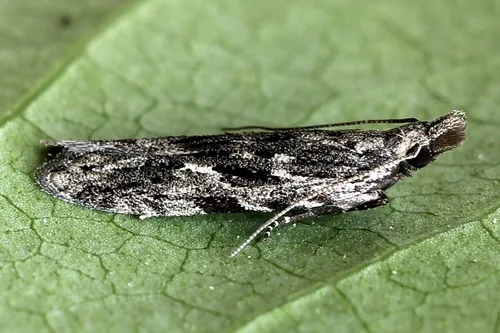
Field Identification
If new growth is curling, yellowing, sticky, or chewed, peach twig borer may already be on the plant. This pest often builds quietly, then damage appears all at once. Feeding stress weakens growth, reduces yield, and opens the door to secondary disease. Early cleanup is much easier than fighting a full population surge later.
Inspect the newest growth first: leaf undersides, flower buds, stem joints, and tender tips where pests gather. Look for body shape, color, eggs, cast skins, honeydew, webbing, or fresh puncture marks. A hand lens and a white paper tap test help reveal small life stages. Matching visible pests with fresh plant damage confirms active infestation.
Not sure what you have? Use the symptom diagnosis tool →
How to Deal With It
Organic Control Methods
Trichogramma spp. egg parasitoids attack peach twig borer eggs — release weekly during adult flight periods. Braconid and ichneumonid wasps parasitize larvae inside shoots. Ants climbing trees disrupt parasitism by protecting honeydew-producing pests that compete with parasitoids — manage ant access with sticky trunk barriers. Support parasitoid wasps with dill, fennel, and sweet alyssum at orchard edges. Diverse predatory insect communities in orchards with minimal pesticide use suppress peach twig borer populations naturally over seasons.
Peach twig borer overwinters as young larvae in bark crevices and hibernacula on the trunk — these re causing wilted flagged shoot tips, the most visible symptom. Later generations attack fruit near the stem end. Pheromone traps establish biofix for degree-day spray timing. Record first catch dates yearly — consistent biofix timing allows accurate spray scheduling. Prune and destroy flagged shoot tips in spring before larvae move to fruit.
Prune and destroy flagged shoot tips as soon as wilting is noticed — snap off wilted tips 4-6 inches below the entry hole and bag for disposal. Remove wild Prunus near orchards that harbor overwintering populations. Thin fruit clusters to reduce protected pockets where larvae hide from sprays and predators. Dormant season inspection and scraping of loose bark removes overwintering hibernacula and significantly reduces spring populations.
Snap wilted flagged shoot tips well below the tunnel — larvae are still inside and the removed shoot eliminates them. Feasible and highly effective on backyard trees and small plots. Pheromone traps monitor adult flight for spray timing. Dormant oil applied to all bark surfaces in late winter smothers overwintering larvae in hibernacula — one of the most effective and overlooked mechanical controls for peach twig borer.
Bt kurstaki or aizawai applied at egg hatch from degree-day models targets young larvae on shoots before they tunnel in — must contact larvae before entry. Spinosad follows stone-fruit spray labels and provides stronger activity. Timing from pheromone trap biofix and degree-day models beats any material choice — spraying at the right moment with a mediocre product outperforms spraying at the wrong time with the best product. Apply at dusk to minimize bee exposure.
Let Nature Handle It
Natural Enemies
- Trichogramma spp.
- Braconid Wasps
- Ichneumonid Wasps
- Lacewing larvae (Chrysopidae)
Threat Map