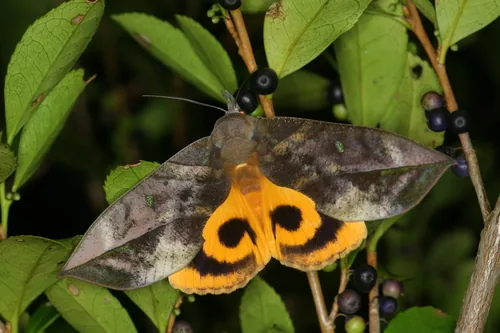
Field Identification
If new growth is curling, yellowing, sticky, or chewed, oriental fruit moth may already be on the plant. This pest often builds quietly, then damage appears all at once. Feeding stress weakens growth, reduces yield, and opens the door to secondary disease. Early cleanup is much easier than fighting a full population surge later.
Inspect the newest growth first: leaf undersides, flower buds, stem joints, and tender tips where pests gather. Look for body shape, color, eggs, cast skins, honeydew, webbing, or fresh puncture marks. A hand lens and a white paper tap test help reveal small life stages. Matching visible pests with fresh plant damage confirms active infestation.
Not sure what you have? Use the symptom diagnosis tool →
How to Deal With It
Organic Control Methods
Trichogramma egg parasitoids attack oriental fruit moth eggs before they hatch — release weekly during adult flight periods starting at biofix. Macrocentrus ancylivorus and other braconid wasps parasitize larvae inside shoots and fruit — support them with dill, fennel, and sweet alyssum at orchard edges. Mating disruption pheromone dispensers confuse male moths and prevent mating — highly effective at orchard scale and available for home orchards. Maintain minimal insecticide use during bloom to preserve parasitoid populations that provide season-long suppression.
Oriental fruit moth has 3-4 overlapping generations per season — early generations attack shoot tips causing wilting flagged shoots, later generations attack fruit causing entry wounds near the stem end. Pheromone traps establish biofix (first consistent male catch) which starts the degree-day accumulation model for timing interventions. Prune and destroy flagged shoots during spring before larvae move to fruit — this removes the population before it builds to fruit-damaging levels.
Remove wild plum and peach thickets near orchards — they harbor overwintering populations that reinvade each season. Prune and destroy flagged shoot tips as soon as wilting is noticed — cut 4-6 inches below the entry hole. Corrugated cardboard trunk wraps trap overwintering larvae seeking pupation sites — remove and destroy wraps in late winter. Pheromone mating disruption works best at blocks of 5+ acres but is worth installing in home orchards surrounded by wild Prunus hosts.
Remove and destroy flagged shoot tips immediately when found — larvae inside will move to fruit if not eliminated. Corrugated cardboard trunk bands trap overwintering larvae. Individual fruit bagging after petal fall excludes egg-laying completely for small plantings. Pheromone traps monitor flight — hang at shoulder height in tree canopy, check weekly.
Bt kurstaki applied at egg hatch timing from degree-day models targets young larvae before they tunnel into shoots and fruit — must contact larvae before entry. Spinosad provides stronger activity and slightly longer residual on stone fruits where labeled. Kaolin clay on young fruit deters egg-laying — apply at petal fall and reapply after rain. Time all sprays to degree-day models or pheromone trap catches rather than calendar dates.
Let Nature Handle It
Natural Enemies
- Macrocentrus ancylivorus
- Trichogramma spp.
- Predatory Beetles
Threat Map