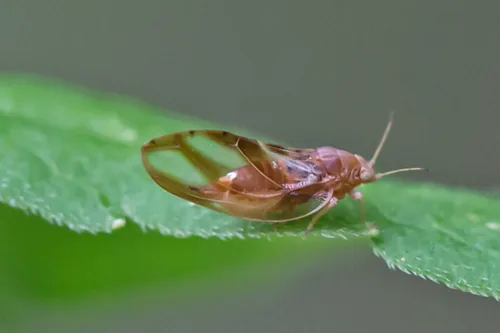
Field Identification
If new growth is curling, yellowing, sticky, or chewed, blackberry psyllid may already be on the plant. This pest often builds quietly, then damage appears all at once. Feeding stress weakens growth, reduces yield, and opens the door to secondary disease. Early cleanup is much easier than fighting a full population surge later.
Inspect the newest growth first: leaf undersides, flower buds, stem joints, and tender tips where pests gather. Look for body shape, color, eggs, cast skins, honeydew, webbing, or fresh puncture marks. A hand lens and a white paper tap test help reveal small life stages. Matching visible pests with fresh plant damage confirms active infestation.
Not sure what you have? Use the symptom diagnosis tool →
How to Deal With It
Organic Control Methods
Lacewing larvae, minute pirate bugs, predatory mirids, and spiders push into curled primocane tips and eat psyllid nymphs if sprays do not flatten them first -- you find out which side is winning by tapping a curled leaf over white paper. Syrphid larvae cruise honeydew lanes. Avoid pyrethrin or soap storms during the first week nymphs appear; that is when predators establish. Plant flowering row ends with alyssum, dill, or yarrow so adult beneficials have fuel when brambles are still tight buds. If you see mummies, stop -- that is parasitism evidence worth preserving.
In regions where this psyllid shuttles between conifers and brambles, new tips near dense spruce or fir windbreaks often flare first -- scout those rows weekly from bud break through early summer. Flip leaves before they curl tightly; once the cup seals, sprays barely reach inside. Flag blocks that showed bronzed tips last year and walk them first next spring. Quarantine imported nursery canes with suspicious leaf cups; isolate them downwind until you are sure they are clean. Tie monitoring to local extension emergence models if available so you are not guessing dates.
Widen spacing between brambles and overwintering conifers where farm layout allows so spring migrants meet dilute canopies instead of wall-to-wall tips. Tip-prune or remove severely cupped primocanes when infestation is still local; bag debris so nymphs do not walk back onto neighbors. Balance nitrogen -- endless soft growth gives psyllids extra generations. Keep irrigation even; drought-curled leaves hide psyllid injury and confuse your scouting. In diversified yards, avoid stacking brambles, bird feeders that attract nuisance mammals, and brush piles that force odd microclimates against the planting.
On small plots, pinch the first inch of curled tip and drop it into soapy water when inspection shows heavy nymphs -- you are removing the mother lode before she lays more eggs. Row covers on first-year plantings block incoming adults if hoops stay tight to the ground and you vent on hot afternoons so canes do not cook. After canes lignify, covers help less; switch to scouting. A stiff water blast dislodges outer nymphs before they cement in honeydew -- repeat every few days during flush.
Narrow-range horticultural oil hits overwintering forms on dormant canes only if labels allow brambles -- read the small fruit section. Insecticidal soap and neem azadirachtin work on soft nymphs before leaves roll; add a spreader-sticker and spray to drip on both leaf surfaces. Time applications for cool evenings when bees are not on open bramble flowers, and respect pre-harvest intervals on fruiting canes. Reapply after rain; new growth may need a second pass seven days later. If curls are leather-tight, prune instead of spraying.
Let Nature Handle It
Natural Enemies
- Minute Pirate Bugs (Orius spp.)
- Lacewing larvae (Chrysopidae)
- Orb-weaver and Crab Spiders
- Syrphid Fly Larvae (Syrphidae)
Threat Map