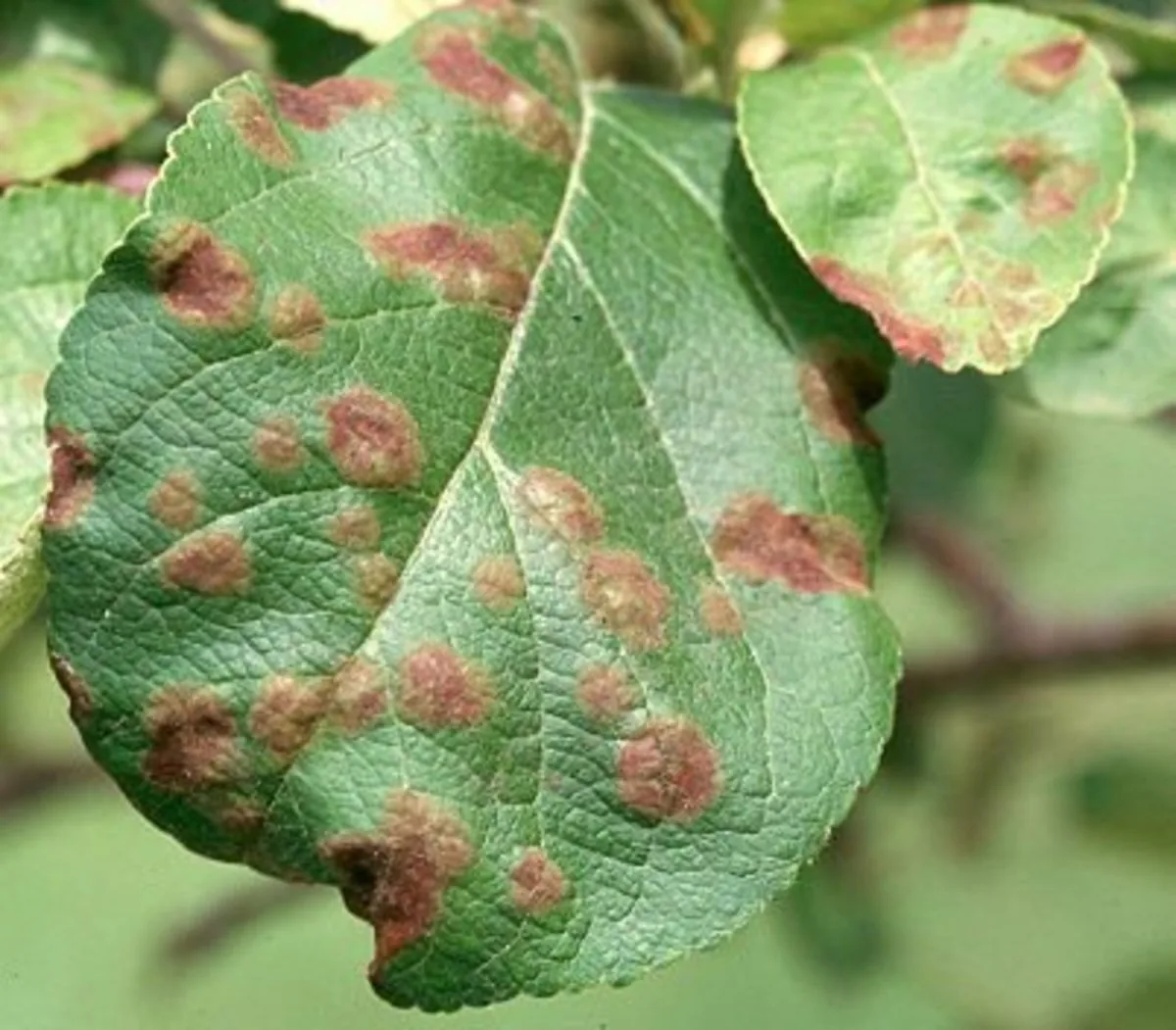
Field Identification
If leaves, stems, or fruit suddenly look spotted, sunken, or rotting, apple scab may already be active. This problem often starts small, then spreads across healthy tissue before most growers realize how serious it is. Warmth, moisture, and crowded foliage usually speed it up. Treat early, because waiting even a few days can turn a manageable infection into major crop loss.
Look for a pattern, not one bad leaf: expanding spots, dark or pale halos, fuzzy growth, or tissue that collapses when touched. Check both leaf surfaces, stem bases, and fruit scars where symptoms first appear. New lesions after rain, overhead watering, or heavy dew are a strong clue. When separate spots begin merging into larger dead patches, the disease is advancing quickly.
Not sure what you have? Use the symptom diagnosis tool →
How to Deal With It
Organic Control Methods
Bacillus subtilis colonizes leaf surfaces and produces compounds that suppress Venturia inaequalis spore germination — apply preventively as part of a rotation during primary scab season. Ampelomyces quisqualis is a hyperparasite of powdery mildew that may reduce associated pressure. Healthy soil biology and mycorrhizal fungi support tree immune response and overall resilience to scab infection. A diverse phyllosphere community on leaf surfaces naturally suppresses scab — avoid sterilizing copper sprays during leaf expansion that eliminate beneficial competing microbes.
Apple scab follows a precise seasonal calendar tied to temperature and moisture. Primary infections occur from silver tip through June as overwintering spores in fallen leaves release during rain events. The Mills Table predicts infection periods from temperature and leaf wetness duration — use it to target sprays at actual infection risk rather than calendar timing. Resistant apple varieties (Liberty, Freedom, Pristine, Enterprise) eliminate scab management entirely — the best long-term solution for home orchards.
Collect and destroy fallen leaves in autumn — this is the most impactful single management action as overwintering spores live in fallen leaf debris. Shred fallen leaves with a mower to accelerate decomposition if collection is impractical. Prune for open canopy — scab spreads in humid stagnant air between crowded branches. Avoid overhead irrigation that wets leaves for extended periods. Mulch under trees to prevent soil splash onto lower leaves.
Remove and destroy fallen leaves each autumn — bag or hot-compost (scab spores survive normal cold composting). Urea sprayed on fallen leaves in autumn accelerates decomposition and kills overwintering spores — cheap and effective. Prune water sprouts and crossing branches that create humid interior zones where scab spreads fastest.
Sulfur fungicide is the most reliable organic spray — apply on a 7-10 day schedule from silver tip through June, more frequently (every 5-7 days) during wet periods. Do not apply when temperatures exceed 90F (32C). Lime sulfur at delayed dormant timing kills overwintering spores on bark and buds. Copper at green tip through tight cluster provides protectant coverage. Kaolin clay applied from half-inch green through petal fall helps but is secondary to sulfur. Rotate materials to prevent resistance buildup.
Let Nature Handle It
Natural Enemies
- Beneficial Microbes
- Competitive Fungi
Threat Map