Field Identification
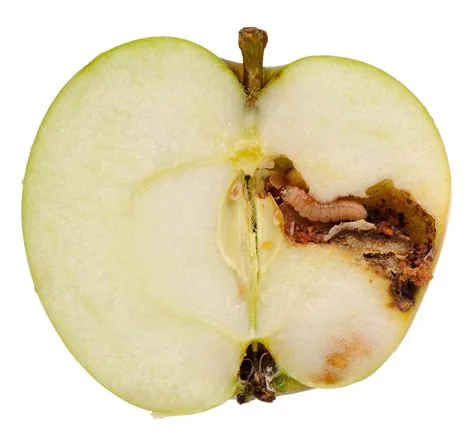
If leaves show trails, fruit turns soft, or roots collapse from inside, apple maggot may already be feeding. The larval stage does most of the damage, often hidden where you cannot see it at first glance. By the time yellowing or rot appears, feeding may be well underway. Move quickly when symptoms begin to prevent another wave of eggs and larvae.
Watch for tiny eggs near plant tissue, pale legless larvae inside mines or fruit, and sudden soft spots or tunnels. Adults are usually small flies that hover or dart when disturbed. Check around wounds, blossoms, and moist plant debris where egg-laying is common. Cut open suspect tissue: live maggots or fresh tunnels are the clearest field confirmation.
Not sure what you have? Use the symptom diagnosis tool →
How to Deal With It
Organic Control Methods
Ground beetles, parasitic wasps, and birds consume apple maggot larvae and pupae in soil under trees — maintain diverse permanent groundcover between rows to support these predators year-round. Steinernema feltiae nematodes applied to soil under tree drip lines in late summer target pupating larvae — apply when soil is moist and above 50F (10C). The most important biological strategy is habitat for ground predators that continuously reduce the pupal population overwinter.
Apple maggot adults emerge in late June through August and lay single eggs just under apple skin — the entry hole is invisible and damage only shows when flesh is brown and tunneled inside. By the time you see damage the larva is already feeding. Red sticky sphere traps baited with apple volatile lure and ammonium acetate capture adults and monitor flight — hang 1 trap per dwarf tree at eye height. When traps catch adults consistently, egg-laying is active and protection is critical. Remove all wild apples and crabapples within 100 yards — they are the primary breeding source.
Collect and destroy all dropped fruit every 2-3 days during the season — larvae exit fallen fruit to pupate in soil, completing the cycle. Remove wild crabapples near orchards which harbor large populations. Prune for open canopy to improve spray coverage. Harvest promptly at maturity — overripe fruit on trees is attractive to laying females and larvae complete development faster in warm fruit.
Red sticky sphere traps are both monitoring tools and mass trapping devices — use at least 1 per tree for mass trapping effectiveness. Individual fruit bagging with paper bags after petal fall completely excludes apple maggot flies from mechanical control for small plantings. Fine mesh netting over entire dwarf trees after pollination is the commercial equivalent.
Kaolin clay (Surround) applied to fruit surfaces deters females from landing to lay eggs — apply every 7-10 days from when adults first appear through harvest, more frequently after rain. Spinosad provides knockdown of adults feeding on foliage — apply at dusk when bees are not active. Neem oil deters egg-laying behavior. No spray reaches larvae inside fruit — all sprays must be applied before egg-laying to be effective.
Let Nature Handle It
Natural Enemies
- Parasitic Wasps
- Beneficial Flies
- Insectivorous Birds
Threat Map