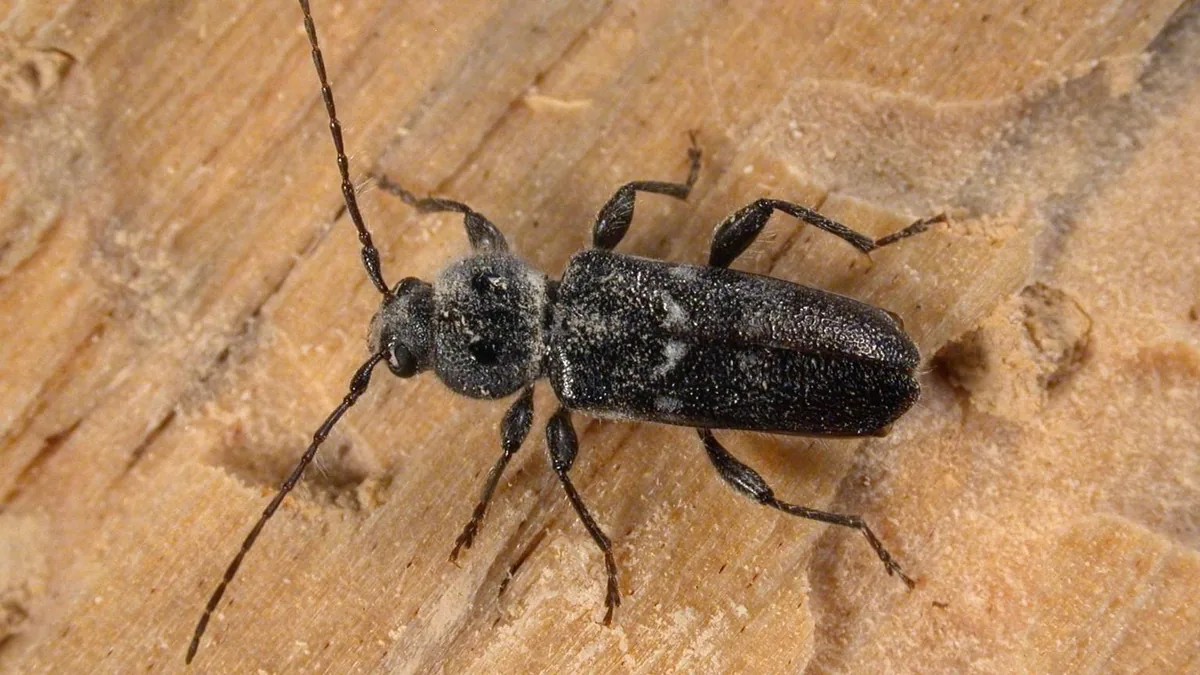
Field Identification
If new growth is curling, yellowing, sticky, or chewed, borers may already be on the plant. This pest often builds quietly, then damage appears all at once. Feeding stress weakens growth, reduces yield, and opens the door to secondary disease. Early cleanup is much easier than fighting a full population surge later.
Inspect the newest growth first: leaf undersides, flower buds, stem joints, and tender tips where pests gather. Look for body shape, color, eggs, cast skins, honeydew, webbing, or fresh puncture marks. A hand lens and a white paper tap test help reveal small life stages. Matching visible pests with fresh plant damage confirms active infestation.
Not sure what you have? Use the symptom diagnosis tool →
How to Deal With It
Organic Control Methods
Parasitic wasps (Spathius, Doryctobracon, and others) are the primary natural enemies of wood-boring larvae — they detect larvae through bark by vibration and smell. Support them with diverse flowering plants at field edges. Woodpeckers excavate borers from trunks — their feeding holes in bark indicate active predation. Beneficial nematodes (Steinernema carpocapsae) injected into borer entry holes reach larvae that no spray can contact — one of the most effective organic treatments for active infestations. Healthy trees with strong resin flow naturally repel and kill borer eggs and young larvae — plant health is genuine biological defense.
Borers target stressed trees first — drought stress, mechanical wounds, compacted roots, and nutrient deficiency all make trees more susceptible. A healthy tree in living soil actively repels most borer species with resin and chemical defenses. Protect trunks from mechanical wounds — string trimmer damage at the base is the most common borer entry point. Adult beetles and moths lay eggs in bark crevices during specific flight windows — tree wraps and white latex paint on trunks deter egg-laying by reducing bark temperature. Learn the flight window for borers in your area and apply preventive treatments before adults are active.
Remove and destroy infested wood — do not chip it for mulch as larvae inside complete development and emerge as adults. Prune infested branches 6 inches below the lowest entry hole. Improve soil health with compost and mulch — trees in healthy living soil resist borers significantly better than trees in compacted or depleted soil. Keep trees properly irrigated during drought — stressed trees emit volatile compounds that actively attract boring beetles.
Wire probing into fresh borer holes kills larvae mechanically — insert flexible wire and push through the tunnel to destroy the larva. Sticky trunk bands catch adult beetles climbing to lay eggs. Scraping egg masses from bark before hatching prevents establishment. For squash vine borers specifically, slitting the vine lengthwise to extract the larva and mounding soil over the wound allows vines to re-root and survive.
Beneficial nematodes (Steinernema carpocapsae) mixed with water and injected into entry holes are the most effective organic treatment for active borer infestations — nematodes seek larvae in tunnels where no spray reaches. Kaolin clay painted on trunks and major branches before adult flight season physically deters egg-laying. Neem oil on bark surfaces disrupts adult feeding and egg-laying behavior.
Let Nature Handle It
Natural Enemies
- Parasitic Wasps
- Birds
- Beneficial Beetles
Threat Map