About
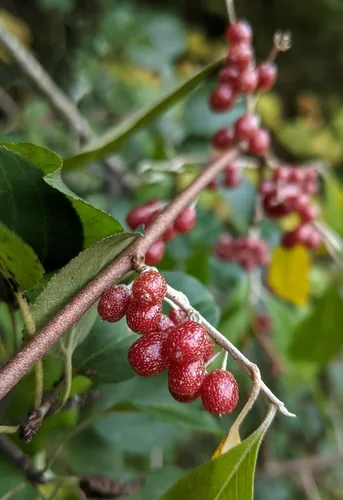
Autumn olive is a fast, thorny shrub with silvery-scaly leaves, fragrant spring flowers, and speckled red berries that birds broadcast everywhere. It fixes nitrogen via actinorhizal roots and laughs at poor soil—which is exactly why it became an invasive nightmare across much of eastern North America. Present and spreading in disturbed edges; do not plant new specimens if you respect nearby natural areas. If you inherited one, heavy fruit removal and replacement with native **Elaeagnus** relatives (where appropriate) is the adult move. Full sun to light shade; tolerant of drought and sand once established; avoid planting in wetlands you care about. Seed (bird-dispersed—please do not help); hardwood cuttings; suckers. Again: this profile exists for ID and legacy sites, not as a planting recommendation. If managing legacy plants, strip fruit before bird spread to cut seed rain; berries are tart raw and want processing, not careless encouragement.
Permaculture Functions
- Edible: Elaeagnus umbellata speckled red berries cook into high-pectin jelly and lekvar once you strain seeds -- this line is for legacy plants only where sale and new planting are already banned; taste raw once, then reach for sugar.
- Nitrogen Fixer: Frankia actinorhizal nodules on roots fed old field hedgerows on sand and mine spoil -- slash prunings into mulch if you manage a site, but stop pretending seed rain is someone else's problem.
- Wildlife Attractor: Heavy late fruit feeds cedar waxwings and robins that also fly seeds into successional woods -- strip fruit before drop if you inherited a hedge and neighbors care about native understories.
- Windbreaker: Thorny silver-leaf thickets slow wind on old farm lanes where the plant already exists -- design replacement natives on the sunny side before removing canopy in one reckless afternoon.
Companion Planting
- Natural areas
- Bird flight paths into preserves
Threats & Pressure