About
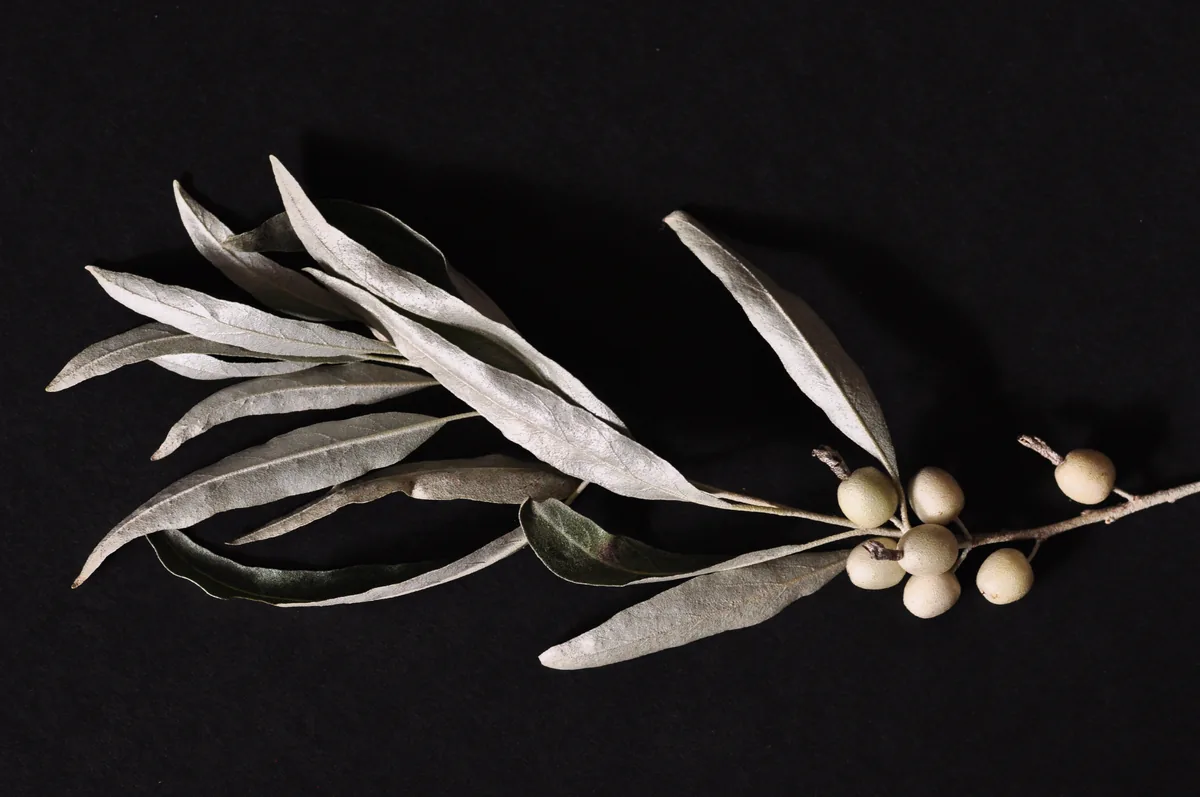
Russian olive is a silvery, drought-tough shrub or small tree that fixes nitrogen with the quiet confidence of something listed invasive in multiple U.S. states. Edible fruit is mealy-sweet to some palates, bird candy to others. If you are in subtropical and tropical Americas, check regional invasive lists before planting—this entry is education-first, not a cheerleader for ecosystem roulette. Full sun for dense silver foliage and fruiting. Tolerates poor, alkaline, and salty soils; drought-tolerant once established—over-irrigation is unnecessary flattery. Seeds: dispersed by birds in the wild; cold stratify for controlled sowing. Hardwood cuttings and suckers can expand colonies—manage boundaries if you plant at all. Fruit when fully ripe; texture divides humans—try small batches before committing a pantry.
Permaculture Functions
- Nitrogen Fixer: Elaeagnus angustifolia fixes nitrogen on saline alkaline ground where many trees fail -- time green mulch returns so leaf litter feeds biology instead of briefly tying surface nitrogen.
- Wildlife Attractor: Heavily scented pale flowers feed bees after many orchard blooms fade -- birds distribute silver olive-shaped drupes far and fast, which is exactly why regional invasive lists exist.
- Windbreaker: Tall multistem habit and narrow silvery leaves blunt desiccating wind across dry corridors, berms, and poultry yards -- while winter light still passes after leaf drop.
- Animal Fodder: Managed browse of tender stems appears in pastoral trials for sheep and goats -- verify stocking rules and palatability tests before leaning on it as primary forage.
Companion Planting
- Wetlands and riparian zones where spread is socially unacceptable
- Planting where regional conservation groups will rightfully glare
- Lavender cotton
- Drought-tolerant grasses at the drip line
Threats & Pressure