About
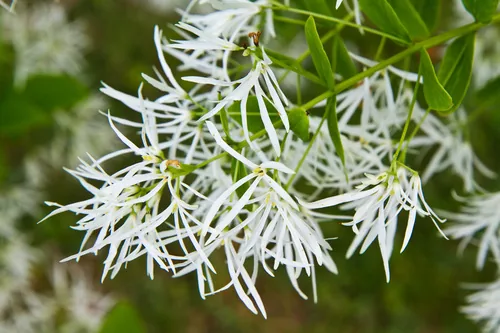
Fringe tree (Chionanthus virginicus) is a small deciduous tree or large shrub of moist woodlands, stream bluffs, and limestone glades across the eastern United States. Spring clouds of slender white petals look like shredded tissue from a distance; female plants (when pollinated) bear dark olive-like drupes. It is a signature native ornamental for understory edges where dogwoods finish too early. Full sun to part shade; best flowering with at least half-day sun. Prefers moist, fertile, well-drained soils; tolerates limestone where organic matter is present. Mulch root zone to buffer summer heat on shallow soils. Sow seed after double dormancy treatment or fall outdoor sowing for natural cycles. Semi-hardwood cuttings under mist can work for clones. Minimal pruning except removing crossing branches in late winter. Fruits are not a human crop focus; leave for birds. Enjoy flowers as ephemeral garden events; avoid heavy shearing that removes next year’s bloom wood.
Permaculture Functions
- Ornamental: Chionanthus virginicus strap-white fringe panicles hang smoke-cloud sweet for two weeks in April across eastern woodland edges -- where redbud pink has already quieted on the same zone 3-9 property line you mulched wide.
- Wildlife Attractor: Female trees set olive-dark drupes bluebirds queue for before dogwood fruit colors in mixed guild rows -- where you planted multiples so dioecious pollination actually happens instead of twig-only disappointment.
- Pollinator: Hundreds of four-petalled flowers per panicle pump fragrance to nocturnal and diurnal generalists needing platform landings -- on small-tree architecture under forty feet tall on moist limestone backyard lots.
- Shade Provider: Open vase habit filters afternoon sun for oakleaf hydrangea understory without deep shade -- that kills fruiting bramble rows entirely on north aspects you already mapped with a solar pathfinder each equinox.
Companion Planting
Also mentioned as companions:
- Redbud
- Oakleaf Hydrangea
Not yet profiled in PermiePortal
- Dioecious fruiting — females need males nearby for bird fruit; plant multiples if drupes matter
- Borers stress — avoid trunk wounds and mower strikes; keep mulch off root collar
Threats & Pressure