About
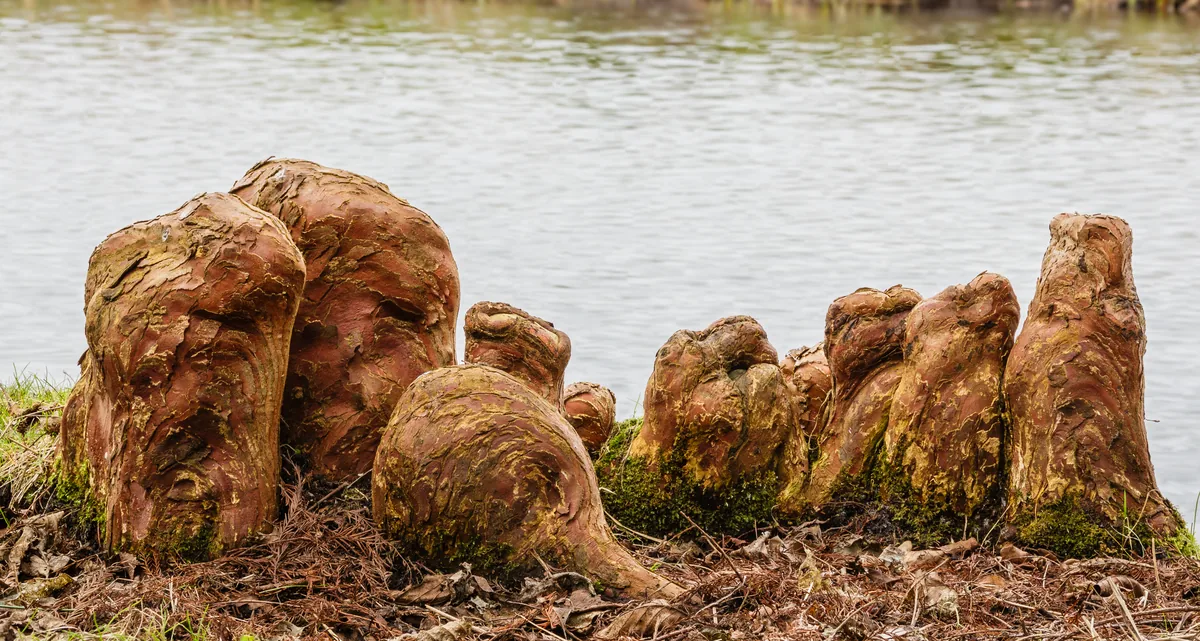
Bald cypress (Taxodium distichum) is a deciduous conifer of southeastern North American swamps and river bottoms, famous for buttressed trunks, rusty fall needles, and knees in flooded soils. It reaches 60–100+ feet (18–30+ m) with a strong straight bole when given room, tolerating long seasonal inundation that drowns lesser trees. In permaculture it is a cornerstone riparian and rain-garden canopy for temperate to subtropical zones, sequestering carbon and stabilizing banks while dropping acidic needle mulch. Full sun for fastest height growth; tolerates wet feet for extended periods and also grows on moist uplands once established. Prefers acidic to neutral soils; chlorosis appears on high-pH sites without organic mulch or appropriate amendments. Drought on sandy uplands works only after deep rooting—irrigate the first several growing seasons. Sow fresh seed in moist sand; seedlings transplant easily if kept humid. Take hardwood cuttings in late winter with bottom heat for clonal trials. Bare-root conservation stock is common in wetland restoration—handle roots gently and plant at correct depth. Timber-grade harvest belongs to long rotations and forest plans, not impulse chainsaw afternoons. For landscape systems, value is ongoing: mulch drop, shade, and bank binding. Collect fallen needles for acid mulch around blueberries where pH goals align.
Permaculture Functions
- Wildlife Attractor: Taxodium distichum old boles develop hollows for barred owls and wood ducks while catkin pollen feeds early bees along river swamps -- knees bubble up where seasonal flooding keeps soils anaerobic part of the year.
- Erosion Control: Buttressed trunks and wide lateral roots armor pond banks against hurricane sheet flow better than rip-rap alone on many Gulf sites -- still avoid planting in permanent deep stagnant water without oxygen pulses.
- Shade Provider: High deciduous conifer canopy cools standing water and shade-tolerant forbs during humid summers -- winter leaf drop lets warming sun reach understory when you want spring ephemerals.
- Mulcher: Rust-colored needle rain acidifies mulch rings for blueberries and azaleas downstream -- sweep intakes and pond skimmers where mats would clog pumps.
- Ornamental: Feathery summer foliage and copper fall needles beat turf theater on wet berms -- chlorosis on high-pH fill means match species to soil chemistry, not more iron wishful thinking.
Companion Planting
- High soil pH — persistent chlorosis without mulch or species better matched to alkaline sites
Threats & Pressure