About
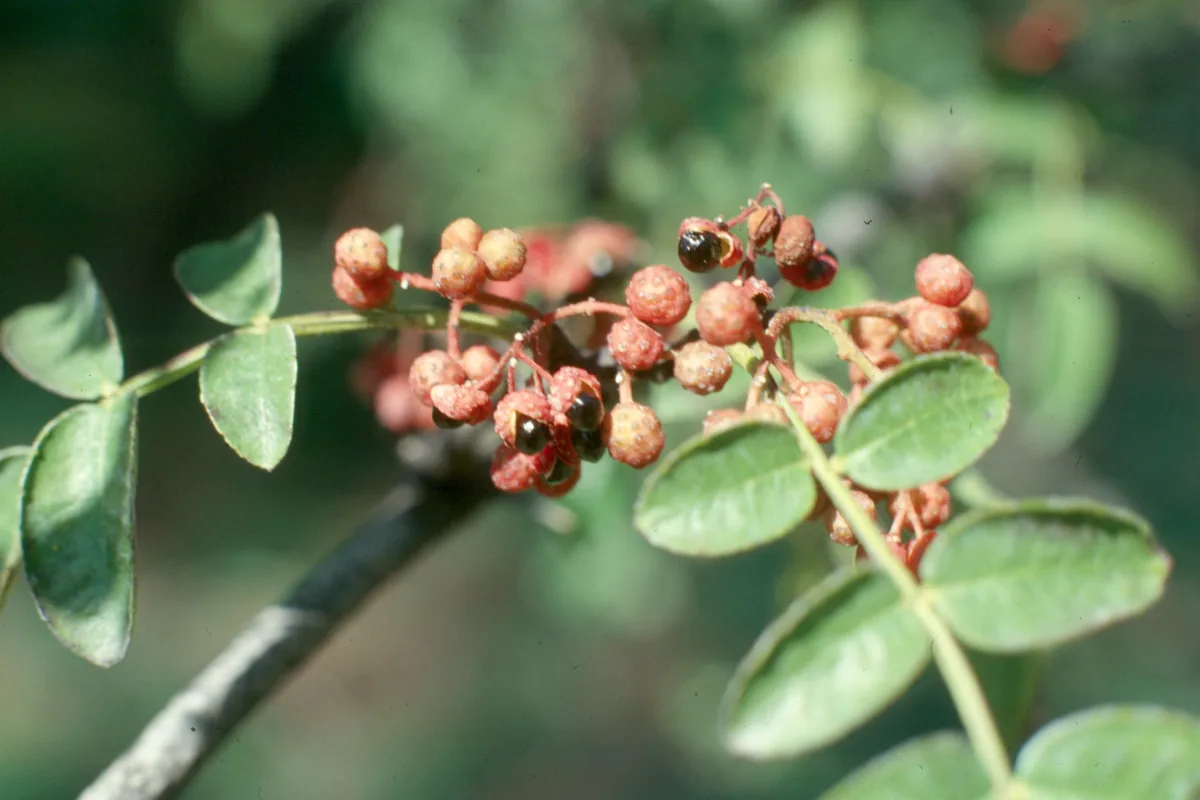
Prickly ash (Zanthoxylum americanum) is a thorny deciduous shrub to small tree native to eastern and central North America, often forming thickets in old fields and woodland edges. Aromatic crushed leaves and bark hint at citrus kinship; compound leaves and paired spines make it unmistakable. It is a traditional spice plant for bold cooks and a larval host for giant swallowtails where landowners tolerate thorns. Full sun to light shade; denser thickets in sun. Moderate moisture; tolerates dryish slopes once established but grows faster with even water. Average soils; tolerates alkaline patches better than many woodland shrubs. Seeds: warm stratify, then cold stratify to break dormancy; sow deep to avoid desiccation. Root cuttings of pencil thickness in dormant season. Suckers transplant easily in early spring with some root. Collect ripe red-brown samaras in late summer for seed propagation. Bark and berries appear in historic spice and herbal contexts—use only with credible training and small trials. Prune for access paths; gloves are not optional.
Permaculture Functions
- Edible: Zanthoxylum americanum split husk capsules yield sanshools that tingle lips like Sichuan peppercorns for traditional dry rubs and bitters -- harvest ripe capsules before birds strip branches; dry slowly to lock volatile alkamides.
- Medicinal: Bark and berry decoctions appear in Indigenous toothache and circulatory protocols tied to alkamide chemistry -- topical tingling is the signal; internal dosing belongs with trained practitioners because GI irritation is documented.
- Wildlife Attractor: Giant swallowtail larvae chew leaves on thickets you tolerate; red drupes feed thrushes and gamebirds in autumn -- plant extra stems because caterpillar defoliation can look dramatic before pupation.
- Border Plant: Paired stem thorns and suckering colonies define pasture corners and restoration edges where plastic signs rot -- mow outward face only if you enjoy flat tires on hidden spines.
Companion Planting
- Thorns and strong oils irritate some people—wear gloves when pruning
Threats & Pressure