About
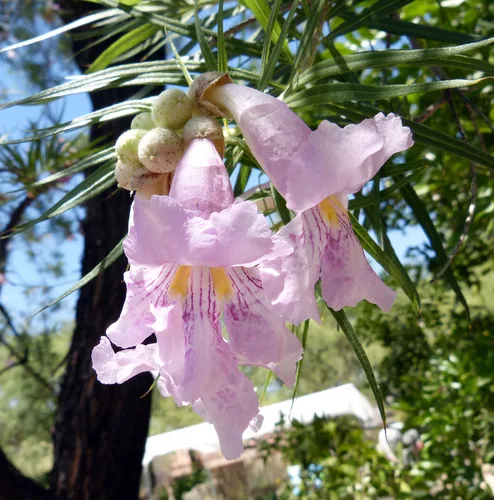
Desert willow (*Chilopsis linearis*) is not a true willow but a heat-loving small tree from southwestern stream sides and arroyos, famous for orchid-like pink-to-lavender trumpet flowers and long, narrow willow-like leaves. It typically grows 15–25 feet tall with an open, airy canopy, sometimes multi-trunked. In subtropical and tropical Americas it performs best in full sun with fast drainage—think berms, gravel mulch, and no standing water after summer downpours. Full sun for maximum bloom. Deep, infrequent watering beats shallow daily sprays; established trees tolerate drought but look lusher with occasional soak. Root rot is the main killer in humid climates—elevate the root zone and avoid lawn sprinklers hitting the trunk. Seeds: Collect long pods when dry; sow in warm, well-drained mix. Seedlings vary in flower color. Softwood cuttings: Take green tips in warm weather, use rooting hormone, and keep high humidity until rooted. For nursery or bonsai use, prune after the main spring–summer flush to shape size. Flowers are at peak in warm months; collect seed pods in late summer or fall when they split easily.
Permaculture Functions
- Ornamental: Chilopsis linearis orchid-like pink-lavender trumpets and narrow willow leaves give arroyo aesthetics -- without true Salix water greed.
- Pollinator: Large tubular flowers load nectar for carpenter bees, bumblebees, and hummingbirds -- blooms through hot dry months when most competitors have shut down.
- Wildlife Attractor: Dry capsules release cottony seed for birds -- open canopy still offers perch and cover along watercourses.
- Shade Provider: Airy 15–25 foot canopy casts dappled shade for agaves, herbs, and patios -- without deep understory darkness.
- Erosion Control: Roots stabilize sandy banks along swales and pond edges -- that flood briefly then drain fast.
- Border Plant: Linear leaves and seasonal bloom mark fence lines and windbreak understories -- in dry designs.
Companion Planting
Threats & Pressure