About
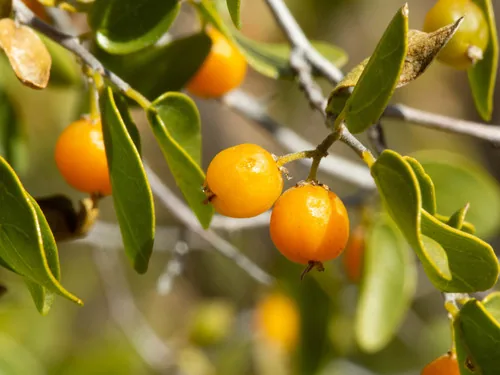
Desert hackberry (*Celtis pallida*) is a drought-hardy, often thorny deciduous shrub or small tree from the southwestern United States and northern Mexico, now occasionally planted in warm, dry corners of subtropical and tropical Americas as a wildlife and erosion-control plant. It forms a rounded crown with small, rough leaves and produces orange-red drupes that birds love. Mature plants are typically 6–15 feet tall and wide, sometimes larger with irrigation. Give full sun to light shade. This plant is built for lean, well-drained soils and tolerates extreme heat and long dry spells once roots are established. In humid subtropical and tropical sites, avoid heavy clay that stays wet; root problems show up fast where drainage is poor. Seeds: Clean ripe fruits and sow in warm soil after last cool weather; germination is often improved with a short soak and warm (75–85°F) conditions. Hardwood cuttings: Take semi-hardwood cuttings in late summer, treat with rooting hormone, and keep humid until roots form. Ripe fruits are picked when fully colored and soft; flavor is sweet-tart and variable. In subtropical and tropical Americas, harvest windows track the warm season—often late spring through fall depending on plant age and moisture. Leaves have forage value for some livestock; prune after fruiting if managing size.
Permaculture Functions
- Edible: Celtis pallida orange-red drupes are sweet-tart fresh or in jelly when fully soft -- identify plants confidently before sampling wild fruit.
- Wildlife Attractor: Thorny architecture and abundant fruit draw songbirds, mammals, and insects -- to arid-style hedges.
- Erosion Control: Fibrous roots bind sandy banks, roadsides, and wash margins -- once heat-season establishment finishes.
- Border Plant: Dense branching forms living fences and property edges in dry climates -- without tall canopy shade.
- Shade Provider: Rounded 6–15 foot crowns cast light shade for agaves, herbs, and seating -- without closing the sky.
Companion Planting
Threats & Pressure