About
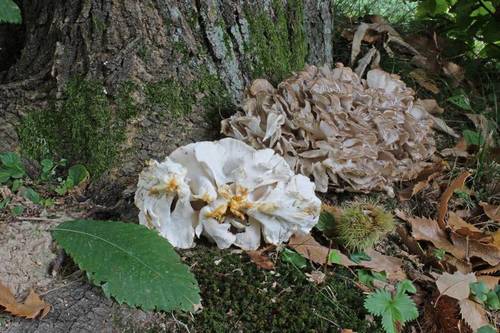
Maitake forms rosettes of overlapping caps at the base of living or dying hardwoods — oaks are the headline host. It is a cool-weather fruiter that shows up when nights drop; subtropical and tropical Americas gets fewer classic flushes than the Appalachians, but oak-rich sites still produce after wet-cool snaps. Outdoor cultivation attempts use buried stem butts or inoculated substrates at tree bases; success is part science, part bribery to the mycelium gods. Wild harvest demands rock-solid ID. ☀️💧 Sun and Water: - Root-zone shade at tree bases; mulch to buffer soil moisture. - Seasonal rains drive flushes; irrigation cannot fully fake a cold autumn. - Avoid compacted, anaerobic soil around host roots. ✂️ ✂️ Propagation: - Outdoor patches from commercial kits or stem-butt transfers (experimental). - Protect colonized zones from foot traffic and mower abuse.
Permaculture Functions
- Edible: Choice when fresh and confidently identified.
- Medicinal: Heavily marketed; keep your wallet and your skepticism aligned.
- Mulcher: Saprophytic/parasitic activity recycles woody root-zone carbon.
Maitake host entries anchor oak-centered fungal yields:
Practitioner Notes
- Overfertilized fast growth dilutes flavor and invites sap feeders—lean soil often tastes more like itself.
- Weigh small test batches before scaling tinctures—solvent ratio mistakes are expensive at gallon ambition.
- Sharp tools and clean cuts beat torn stems; disease spores love frayed tissue more than rhetoric.
- Morning picks hold turgor; afternoon heat steals shelf life even if the cooler feels honest.
Companion Planting
- Oak
- Beech
- Maple
Pest Pressure