About
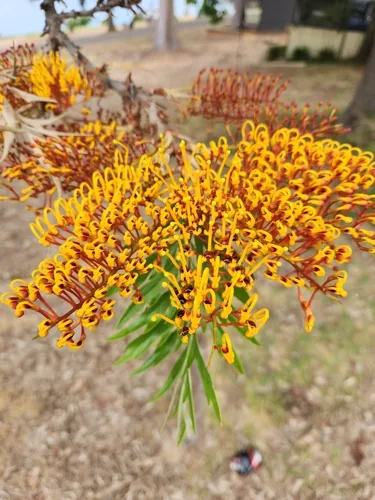
Silk oak (Grevillea robusta) is a fast Australian tree with ferny, deeply divided bright green leaves and spectacular golden bottlebrush inflorescences in late winter to spring, followed by woody follicles bearing winged seeds. It commonly reaches 40–70 feet in frost-free climates with a straight trunk and light, somewhat open crown used for shade in coffee and tea-style polycultures; timber is valued where markets exist. Full sun for upright form and heavy bloom; tolerates heat once roots are deep. Moderate water during establishment; somewhat drought-tolerant later. In Florida and Puerto Rico, avoid planting near structures—brittle wood and shallow aggressive roots can lift pavement; check local invasive alerts before planting. Seeds: sow fresh seed in warm moist mix; seedlings grow quickly. Rootable cuttings are possible for select clones but seed is standard for this species. Prune for wind protection architecture while young; collect fallen flowers for compost when they carpet the ground. Thin self-sown volunteers promptly where the species is aggressive.
Permaculture Functions
- Shade Provider: Grevillea robusta bipinnate leaves scatter light evenly so coffee and cacao seedlings harden off -- without midday sunburn under Australian provenance genetics.
- Windbreaker: Straight boles and open crowns knock velocity off subtropical trades -- without casting deep rainforest shade beneath.
- Wildlife Attractor: Golden toothbrush inflorescences drip nectar for lorikeets, honeyeaters, and carpenter bees -- timed to dry-season bloom peaks when other nectar is scarce.
- Mulcher: Fine acidic leaflets and spent racemes compost fast under zinc-hungry guild partners -- that tolerate proteoid litter chemistry.
- Ornamental: Sulphur flower clouds read like roadside fireworks for one month -- plan sightlines before pollen-sensitive neighbors plant bedroom windows downslope.
Companion Planting