About
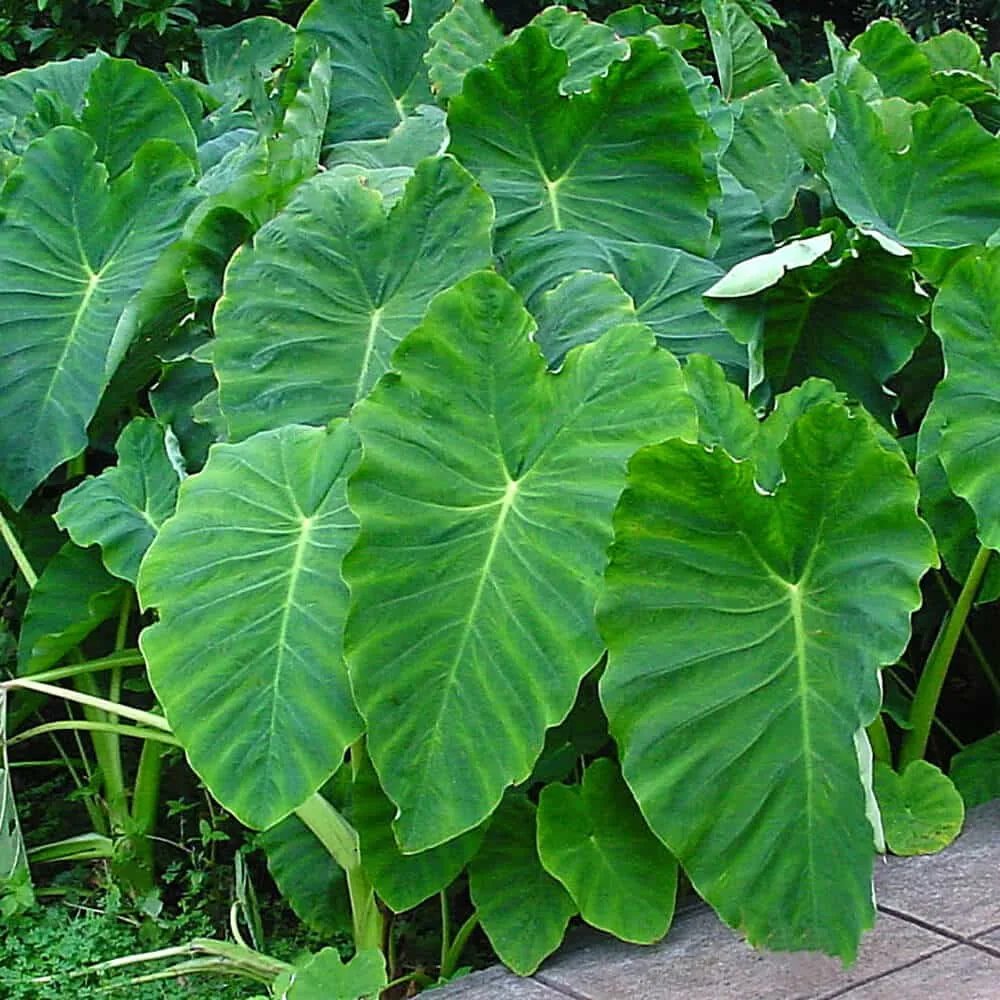
Taro (*Colocasia esculenta*) is a perennial, tropical plant primarily grown for its edible, starchy corms. The plant typically reaches heights between 1 and 2 meters and features large, heart-shaped leaves that can measure up to 45 cm in length and 35 cm in width. The corms have a brown, rough skin encasing white, sometimes purple-tinged flesh rich in starch. Taro thrives in warm, humid environments and is commonly cultivated in wetland areas or flooded fields. Taro prefers full sun exposure but can tolerate partial shade. It requires abundant water and is often grown in paddy-like conditions. Consistent moisture is crucial for optimal growth. Propagation is typically achieved by planting small sections of the corms, each containing at least one bud. These are planted shallowly in moist soil or directly in waterlogged fields. Corms are usually ready for harvest 7 to 12 months after planting, once the leaves begin to yellow and die back. Harvesting involves lifting the corms from the soil or mud, followed by cleaning and drying.
Permaculture Functions
- Edible: Colocasia esculenta poi-grade corms ferment into paste after slow cooking destroys oxalate crystals -- respect Hawaiian protocols instead of improvising raw bites.
- Animal Fodder: Leaf blades chop into silage on Pacific islands -- where calcium oxalate drops after fermentation passes pig safety thresholds managed by experienced feeders.
- Ground Cover: Broad leaves tile irrigated loʻi so weeds lose light -- while mud stays armored against tropical cloudbursts.
Companion Planting
- None specific
Threats & Pressure