About
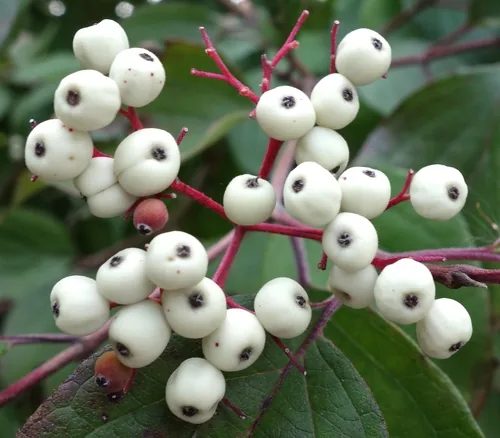
Roughleaf dogwood (Cornus drummondii) is a deciduous shrub to small tree of central North American thickets, stream edges, and limestone glades. Leaves are sandpapery above, veins prominent beneath; creamy spring flowers precede white berries on red pedicels. It is a tough native for hedgerows, bioswale edges, and wildlife plantings where showier dogwoods demand pampering. Full sun to partial shade; blooms and fruit better with more light. Moderate moisture; tolerates intermittent wet feet along banks. Adaptable soils; tolerates alkaline rocky sites better than many Cornus. Seeds: clean and stratify; germination may take two winters. Softwood cuttings in early summer under mist. Suckers transplant in early spring with roots attached. Berries are technically edible but bitter; leave primarily for birds. Prune after flowering if shaping; winter cuts remove spring bloom potential. Collect cut stems for habitat piles before bud swell if managing thicket density.
Permaculture Functions
- Wildlife Attractor: Cornus drummondii creamy cymes feed spring bees; white drupes on red pedicels feed catbirds and raccoons while humans remember berries are bitter chemistry lessons -- leave fruit for birds, not tasting menus.
- Erosion Control: Fibrous roots and limestone tolerance stabilize seepy banks and rocky draws where fussier dogwoods sulk -- tolerates intermittent wet feet along bioswale toes without demanding perfect peat.
- Border Plant: Suckering thickets knit livestock lanes and fencerows into living walls that need little shearing if you accept thicket architecture -- lollipop fans should shop ornamental cultivars elsewhere.
- Ornamental: Sandpaper upper leaf surfaces flash honest ID against other Cornus; fruiting stalks color after bloom for late-season quiet drama -- prune after flowering if shaping, winter cuts erase spring show.
Companion Planting
Threats & Pressure