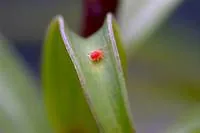
Field Identification
If leaves look dusty, speckled, bronzed, or curled without obvious chewing, clover mites is a likely suspect. Mites are tiny but can multiply fast, especially during heat and dry air. Plants lose vigor as feeding drains cell contents from leaves and tender growth. Early action matters, because heavy infestations can spread through a bed in days.
Use a hand lens and check leaf undersides first, especially near veins and new growth. Look for pinprick stippling, fine webbing in some species, and tiny moving dots that range from pale to red or brown. Tap a leaf over white paper; moving specks suggest active mites. Stippled leaves plus mites or eggs clustered under foliage confirms the diagnosis.
Not sure what you have? Use the symptom diagnosis tool →
How to Deal With It
Organic Control Methods
Predatory mites, spiders, and minute pirate bugs eat clover mites when they can reach them on open leaf surfaces -- rolled turf or thick thatch hides prey. Ground beetles pick off mites crawling at soil line. Avoid broad-spectrum sprays on lawn edges; they kill predators while mites walk back from concrete seams.
Clover mites invade from dry, sunny foundations and fence lines -- reduce irrigation mist on siding and rake mulch back from stem walls so mites have fewer bridges. Avoid heavy nitrogen on turf against south walls; soft growth shows damage faster. Scout early spring when mites migrate from warming mulch to new growth.
Keep garden spacing open so inner leaves dry after dew. Remove thick leaf litter against house foundations where mites overwinter. Mow turf at proper height to reduce drought stress that stacks on mite stippling. Fix leaks that keep concrete permanently damp; mites love that seam.
A strong jet of water dislodges mites from ornamental leaves and siding -- repeat every two days during migration weeks. Sticky traps along garden edges catch dispersing mites for monitoring; they are not a cure. Vacuum exterior sills with a shop vac on dry days before mites crawl indoors.
Horticultural oil or dilute insecticidal soap contacts mites on plant surfaces -- spray to drip, especially leaf undersides. Test on a small area before coating siding paints. Repeat on short intervals while mites move; one spray misses eggs in cracks. Avoid spraying during hot sun when oil burns leaf tissue.
Let Nature Handle It
Natural Enemies
- Predatory Mites
- Spiders
- Insectivorous Insects