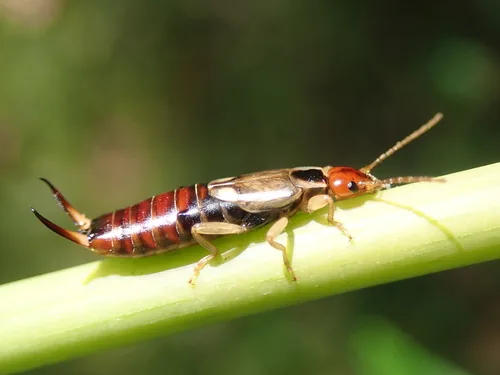
Field Identification
If new growth is curling, yellowing, sticky, or chewed, earwig may already be on the plant. This pest often builds quietly, then damage appears all at once. Feeding stress weakens growth, reduces yield, and opens the door to secondary disease. Early cleanup is much easier than fighting a full population surge later.
Inspect the newest growth first: leaf undersides, flower buds, stem joints, and tender tips where pests gather. Look for body shape, color, eggs, cast skins, honeydew, webbing, or fresh puncture marks. A hand lens and a white paper tap test help reveal small life stages. Matching visible pests with fresh plant damage confirms active infestation.
Not sure what you have? Use the symptom diagnosis tool →
How to Deal With It
Organic Control Methods
Earwigs are actually beneficial in many situations -- they eat aphids, insect eggs, and decaying organic matter voraciously. Before treating, confirm that earwigs are causing the damage you see. Ragged holes in flowers and soft fruit with earwigs present overnight are genuine damage. Earwigs in the garden during the day are usually scavenging, not feeding on plants. Toads, ground beetles, centipedes, and birds eat earwigs. Tachinid flies parasitize adults in some regions. Diverse habitat with permanent ground cover supports these predators year-round.
Earwigs are nocturnal and hide during the day in dark moist crevices -- under boards, in mulch, in rolled leaves, and in flower petals. They feed at night on soft plant tissue, decaying matter, and other insects. The characteristic damage is ragged holes in leaves, petals, and soft fruit that appear overnight. Reduce hiding spots near vulnerable plants -- remove boards, dense mulch against stems, and debris. Pull mulch back from plant bases and tighten up garden housekeeping in problem areas.
Trap earwigs with damp newspaper rolls, corrugated cardboard, or boards placed near affected plants overnight -- collect and destroy in the morning. Beer traps (shallow containers sunk to soil level) drown earwigs attracted by fermentation. Reduce excessive mulch against plant stems while maintaining mulch in paths where earwigs are less damaging. Tie up strawberry clusters and use clean straw lifts to keep fruit off damp soil where earwigs shelter.
Trap-and-destroy is the most effective control -- damp newspaper rolls or corrugated cardboard left near affected plants overnight collect large numbers of earwigs sheltering during the day. Check and destroy every morning during peak season. Diatomaceous earth applied as a dry band around plant stems damages earwig cuticle when they cross it -- must be reapplied after rain. Petroleum jelly or sticky barriers on pot rims prevent climbing.
Insecticidal soap or spinosad applied at night directly to earwigs feeding on plants provides quick knockdown -- treating after dark when earwigs are active gives far better contact than daytime applications. Diatomaceous earth dusted on and around crown zones and under foliage abrades the cuticle on contact -- effective when dry, loses effectiveness when wet. Neem oil on susceptible flowers and fruit surfaces deters feeding. Consider tolerance before spraying -- earwigs eat large numbers of aphids and should not be eliminated from the garden.
Let Nature Handle It
Natural Enemies
- Tachinid Flies (Tachinidae)
- Ground Beetles (Carabidae)
- Toads and Frogs (Anura)
- Centipedes (Chilopoda)