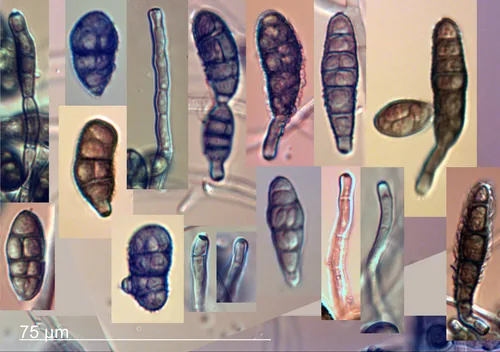
Field Identification
If leaves, stems, or fruit suddenly look spotted, sunken, or rotting, alternaria leaf spot may already be active. This problem often starts small, then spreads across healthy tissue before most growers realize how serious it is. Warmth, moisture, and crowded foliage usually speed it up. Treat early, because waiting even a few days can turn a manageable infection into major crop loss.
Look for a pattern, not one bad leaf: expanding spots, dark or pale halos, fuzzy growth, or tissue that collapses when touched. Check both leaf surfaces, stem bases, and fruit scars where symptoms first appear. New lesions after rain, overhead watering, or heavy dew are a strong clue. When separate spots begin merging into larger dead patches, the disease is advancing quickly.
Not sure what you have? Use the symptom diagnosis tool →
How to Deal With It
Organic Control Methods
Trichoderma soil drenches sometimes reduce Alternaria crown phases on carrots and melons -- combine with rotation and sanitation, not as a solo hail Mary. Bacillus subtilis foliar products compete on leaf surfaces when humidity stays high. Soil biology supports plant vigor; it does not erase spores blowing in wet wind.
Do not save seed from infected fruit; pathogens ride seed coats. Sanitize high tunnels between crops; spores survive on stakes and walls. Monitor lower leaves after canopy closure -- first lesions splash upward from soil after rain.
Widen spacing and trellis tomatoes so leaves dry before evening. Avoid overhead irrigation that wets foliage all night. Deep crop rotation away from solanaceous and cucurbit hosts for several years in problem gardens. Destroy infected debris; cold piles still sporulate. Choose resistant cultivars where catalogs are honest.
Plastic mulch reduces soil splash onto lower tomato and melon leaves -- bury edges so wind does not flip film. Prune lowest tomato leaves that touch ground. Stake fruit off soil in melons to reduce contact with infested dirt.
Copper, sulfur, and Bacillus-based biofungicides go on protectant schedules through humid weather -- apply before rain, not after lesions merge. Remove badly spotted leaves on small plots to slow sporulation. Reapply after rain per label; protectant films wash off.
Let Nature Handle It
Natural Enemies
- Trichoderma spp.
- Bacillus subtilis
- Competitive Saprophytes
Threat Map