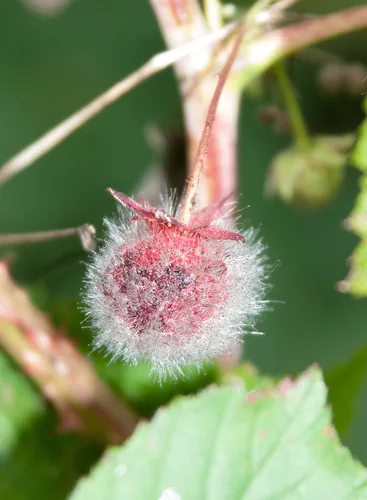
Field Identification
If leaves, stems, or fruit suddenly look spotted, sunken, or rotting, gray mold may already be active. This problem often starts small, then spreads across healthy tissue before most growers realize how serious it is. Warmth, moisture, and crowded foliage usually speed it up. Treat early, because waiting even a few days can turn a manageable infection into major crop loss.
Look for a pattern, not one bad leaf: expanding spots, dark or pale halos, fuzzy growth, or tissue that collapses when touched. Check both leaf surfaces, stem bases, and fruit scars where symptoms first appear. New lesions after rain, overhead watering, or heavy dew are a strong clue. When separate spots begin merging into larger dead patches, the disease is advancing quickly.
Not sure what you have? Use the symptom diagnosis tool →
How to Deal With It
Organic Control Methods
Bacillus subtilis (Serenade), Ulocladium atrum, and Gliocladium catenulatum colonize plant surfaces and compete directly with Botrytis cinerea -- apply preventively to flowers and developing fruit clusters before wet weather arrives. These work best as part of a rotation with other fungicides rather than as standalone controls. A diverse and active phyllosphere microbial community naturally suppresses Botrytis -- avoid broad-spectrum copper sprays that sterilize leaf surfaces and eliminate competing microbes.
Gray mold (Botrytis) is the most common post-harvest fruit disease and a major problem in dense plantings. It enters through wounds, dead tissue, and spent blossoms -- remove spent flowers immediately and any dead or dying plant tissue. Botrytis thrives in cool humid conditions with poor air circulation. The fuzzy gray spore masses on infected tissue are unmistakable. Spores travel in air currents and infect through any wound or senescent tissue. Avoid overhead irrigation that keeps canopy wet for extended periods.
Remove spent blossoms and infected fruit immediately -- each gray fuzzy mass produces millions of spores that infect everything nearby. Mulch strawberries and other low-growing fruit to keep berries off damp soil. Widen plant spacing for maximum air circulation -- dense humid canopies are Botrytis paradise. Avoid bruising fruit at harvest -- bruises are primary Botrytis entry points. Harvest promptly and cool quickly -- gray mold progresses rapidly at room temperature and slows dramatically at refrigerator temperatures.
Berry clamshells or tunnel covers with good ventilation protect ripening fruit from the wet conditions that trigger infection. Fans in high tunnels maintain air movement that reduces humidity pockets where Botrytis thrives. Remove all infected plant material immediately and bag for disposal -- never compost Botrytis-infected tissue as spores survive composting.
Bacillus subtilis (Serenade) applied preventively every 7 days before wet weather provides the most reliable organic protection -- it must be applied before infection, not as a cure. Potassium bicarbonate kills Botrytis spores on contact and is most effective as an early curative spray on visible infections. Sulfur fungicide on some crops during cool dry weather -- do not apply above 90F (32C). Copper at low rates on some crops. Rotate materials to prevent resistance. No spray cures infected tissue -- remove it immediately.
Let Nature Handle It
Natural Enemies
- Hyperparasitic Fungi
- Antagonistic Bacteria