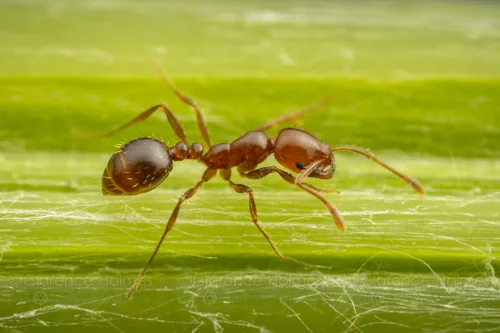
Field Identification
If new growth is curling, yellowing, sticky, or chewed, fire ant may already be on the plant. This pest often builds quietly, then damage appears all at once. Feeding stress weakens growth, reduces yield, and opens the door to secondary disease. Early cleanup is much easier than fighting a full population surge later.
Inspect the newest growth first: leaf undersides, flower buds, stem joints, and tender tips where pests gather. Look for body shape, color, eggs, cast skins, honeydew, webbing, or fresh puncture marks. A hand lens and a white paper tap test help reveal small life stages. Matching visible pests with fresh plant damage confirms active infestation.
Not sure what you have? Use the symptom diagnosis tool →
How to Deal With It
Organic Control Methods
Phorid flies (Pseudacteon spp.) are imported parasitoids that specifically target fire ants — they dive-bomb workers, lay eggs in their heads, and the emerging larvae consume the ant's brain, causing the head to fall off. They have been released across the southern US and are establishing in many areas. You cannot buy them but you can check whether they are present in your county through your state extension service. A diverse ant community outside production areas creates biological competition — fire ants dominate in disturbed, bare soil. Permanent ground cover and undisturbed areas favor native ant species that compete with fire ants for territory.
Fire ants thrive in open, sunny, disturbed soil — they rarely establish under dense mulch or in shaded areas. Deep wood chip mulch (4+ inches) dramatically reduces mound establishment in garden beds. Fire ants also protect aphids, mealybugs, and scale insects from predators in exchange for honeydew — managing these soft-bodied pests reduces fire ant presence near plants. New mounds appear after rain when colonies relocate. Inspect perimeters weekly after rainfall in spring and summer. Treat small new mounds immediately — a young colony is a fraction of the size and effort of an established one.
Fire ants are most aggressive when mounds are disturbed — always wear closed shoes and long pants when working near known mound areas. They move colony locations frequently, especially after disturbance or flooding. Marking mound locations and tracking movement patterns helps anticipate where new mounds will establish. Compost piles that include lawn sod from infested areas can import fire ant colonies — hot compost piles above 130F (54C) kill ants but not all home piles reach this consistently. Inspect new compost additions from suspect sources.
Pouring 2-3 gallons of boiling water directly into a mound kills 60% of colonies on contact — effective, free, and chemical-free. Do it in cool morning hours when the colony is clustered near the surface for warmth. Multiple treatments 1 week apart improve success rates. This works best on young mounds. Deep-established colonies have tunnels extending 6 feet down and may require multiple boiling water treatments or relocate rather than die. Physically digging up small new mounds and destroying the queen eliminates the colony — the queen is larger, winged if reproductive, and located in the deepest tunnel chamber.
D-limonene (orange oil) mound drench kills ants on contact when the entire nest is thoroughly soaked — mix 1.5 oz per gallon of water with a squirt of dish soap and pour 2-3 gallons directly into the mound. The soap breaks surface tension allowing penetration. Effectiveness depends entirely on reaching the queen deep in the mound. Diatomaceous earth sprinkled around mound perimeters deters foraging but does not kill colonies. Spinosad bait products are the most effective organic option for established colonies — workers carry the bait to the queen and brood, eliminating the whole colony over 1-2 weeks. Apply in dry weather away from water.
Let Nature Handle It
Natural Enemies
- Phorid Flies (Pseudacteon spp.)
- Parasitic Nematodes (Steinernema spp.)
- Fungal and Microsporidian Pathogens
- Competing Ant Species