Field Identification
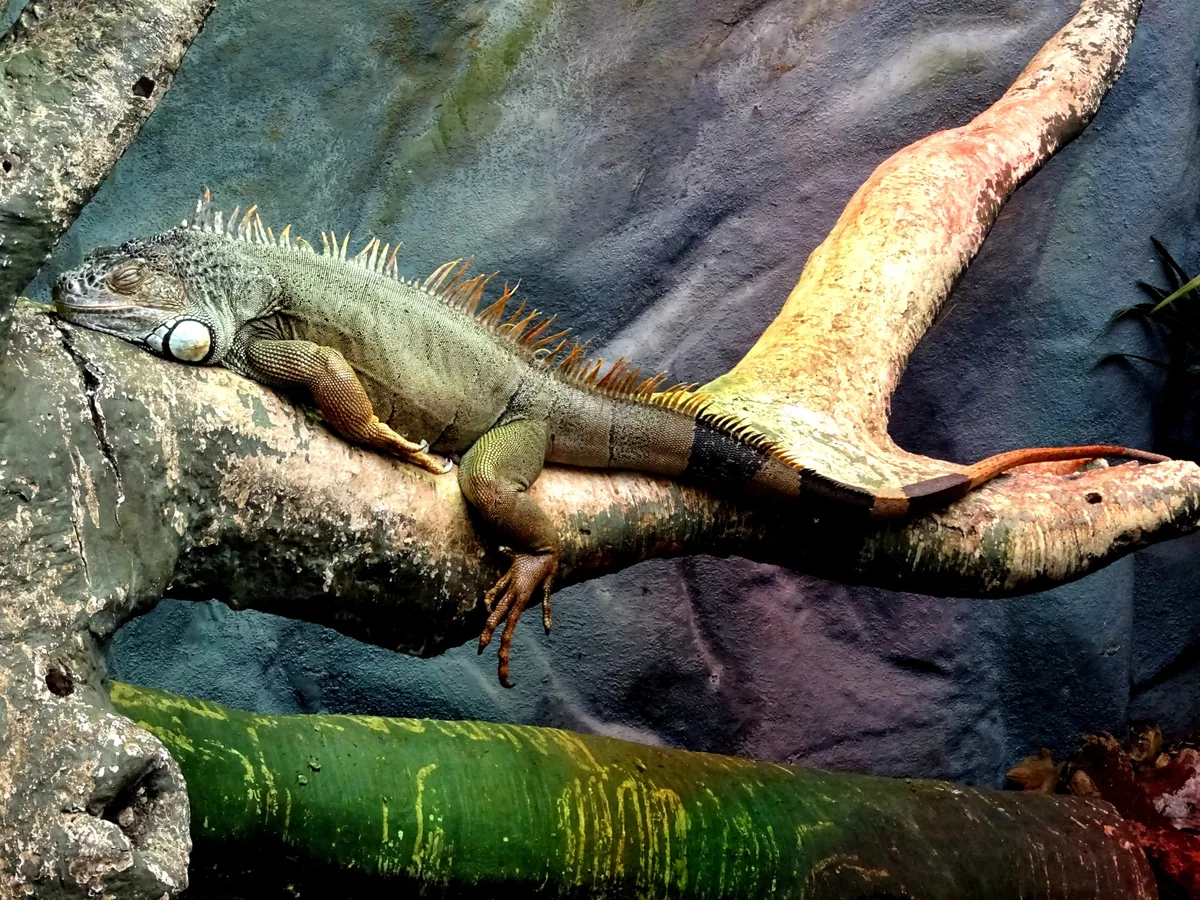
If flowering plants, hibiscus, roses, or tender new growth are cleanly stripped during the day with no sign of insects — and you live in South or Central Florida — iguanas are almost certainly the cause. Green iguanas are invasive in Florida, arrived via the pet trade, and have no natural predators here. They are large, bold, and active during warm daylight hours. A single adult can devastate a garden bed in one visit. They are particularly destructive in food forests because they target the same high-value tender growth, flowers, and fruit that you are growing. They also dig burrows that undermine foundations, seawalls, and root systems.
Green iguanas are hard to miss — adults reach 4-6 feet including the tail and are bright green to gray-green. They are most active on warm sunny days and retreat to water or burrows when threatened. Look for clean clipping of flower buds, tender shoots, and leafy greens — they feed like browsers, taking the best growth. Droppings are dark cylindrical pellets often left near feeding sites. Burrow entrances are 4-6 inches wide, typically under structures, seawalls, or at the base of trees. They are excellent swimmers and climbers — no plant is safe by height alone. Females lay eggs in burrows, 20-70 eggs per clutch, which is why populations grow so fast once established.
Not sure what you have? Use the symptom diagnosis tool →
How to Deal With It
Organic Control Methods
There are no established biological controls for green iguanas in Florida. Natural predators in their native range — large raptors, tegus, crocodilians, and large constrictors — are absent or ineffective at population control here. Dogs deter iguanas from specific areas but do not reduce populations. Hawks and owls occasionally take juveniles. The Florida Fish and Wildlife Conservation Commission actively encourages humane removal — iguanas are not protected in Florida and can be humanely killed year-round on private property. Long-term the only effective approach is population reduction combined with exclusion.
Iguanas are cold-sensitive — populations crash after hard freezes and expand rapidly in warm years. They are most destructive from March through November in Central Florida and year-round in South Florida. Protect high-value plants during establishment with physical barriers since mature plants tolerate browse better than seedlings. Iguanas are attracted to water — ponds, canals, and birdbaths are congregation points. Remove fallen fruit immediately as it attracts feeding. Do not feed iguanas intentionally or leave food scraps accessible — habituation makes them bolder and harder to deter.
Plant iguana-resistant species strategically — iguanas strongly dislike citrus, tough or spiny-leaved plants, and strongly aromatic herbs including lemongrass, garlic, chives, and rosemary. They prefer soft-leaved flowering plants, hibiscus, roses, impatiens, and leafy greens. A food forest with diverse aromatics and thorny understory is less attractive than an ornamental garden. Sacrifice planting — placing preferred plants like hibiscus away from your main beds — can redirect feeding. Reduce burrow opportunities by removing brush piles and debris and filling existing burrows with gravel to discourage re-establishment.
Smooth metal tree guards around trunks prevent climbing to reach canopy growth. Hardware cloth or welded wire fencing buried 12 inches deep and angled outward at the base prevents burrowing under. Overhead netting over garden beds protects crops but iguanas are persistent climbers — ensure netting is taut and secured. Motion-activated sprinklers startle iguanas and provide short-term deterrence but iguanas habituate quickly — move the sprinkler frequently. Trapping with large wire cage traps baited with fruit is effective for persistent individuals. Check Florida regulations on removal and relocation before trapping.
Garlic and hot pepper sprays applied to foliage deter iguana feeding — mix several crushed garlic cloves and hot pepper flakes in water, steep overnight, strain and spray on leaves. Reapply after rain. Neem oil makes leaves less palatable and is worth applying to high-value plants. Predator urine (coyote) at burrow entrances and fence lines has some deterrent effect. These sprays reduce feeding on treated plants but do not solve the underlying population problem — they work best as part of a broader exclusion and deterrence strategy rather than as a standalone solution.
Let Nature Handle It
Natural Enemies
- Hawks
- Owls
- Large Snakes
- Tegus
- Dogs
Threat Map