Field Identification
If leaves look shredded overnight or fruit has fresh chew holes, wireworm may be feeding right now. These larvae can eat fast and strip a healthy plant in a short window. Young stages are easy to miss, then damage suddenly explodes as they grow. Catch them early to avoid severe defoliation and contaminated harvests.
Check leaf undersides, growing tips, and stem junctions for eggs, frass pellets, and feeding scars. Larvae vary in color, but most have a soft segmented body and blend into foliage. Look at dusk or early morning when many species feed more actively. Fresh chewing plus live larvae or droppings on lower leaves confirms an active caterpillar outbreak.
Not sure what you have? Use the symptom diagnosis tool →
How to Deal With It
Organic Control Methods
Entomopathogenic nematodes (Steinernema feltiae, S. carpocapsae) applied to moist warm soil target wireworm larvae -- apply when soil temperature is above 55F (13C) and keep moist for 2 weeks. Results are variable but improve with repeated applications over seasons. Ground beetles are voracious wireworm predators -- permanent undisturbed soil edges, mulch paths, and diverse plantings support ground beetle populations year-round. Metarhizium brunneum fungal products show promising results against wireworms in research trials and are becoming commercially available. Birds -- especially robins, starlings, and crows -- actively probe for wireworms after tillage.
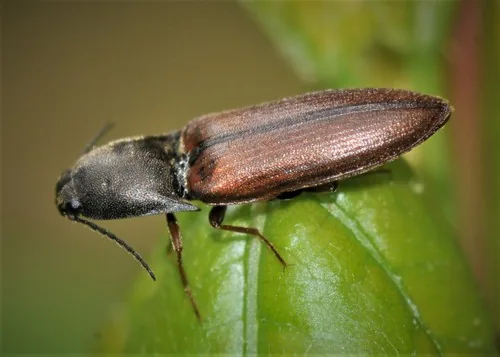
Wireworms are the larvae of click beetles -- hard, shiny, yellow-orange worms 1-2 inches long in soil. They chew into seeds, roots, tubers, and underground stems, causing plants to wilt and die with no visible above-ground pest. Before planting a new bed in old lawn or weedy ground, do a soil bioassay -- bury a germinating wheat or potato chunk 4-6 inches deep, check after 5 days, and count wireworms attracted to it. High counts predict serious damage. Wireworm populations built under sod take 2-3 years to decline after grass is removed.
Summer fallow with repeated shallow tillage every 1-2 weeks desiccates exposed larvae and brings them to the surface for bird predation -- the most effective long-term reduction strategy. Delay planting until soil warms above 50F (10C) -- wireworms are most damaging in cold soil when seeds germinate slowly and are vulnerable longer. Convert weedy sod gradually over 1-2 seasons rather than sudden tillage -- sudden plowing concentrates wireworm populations that dispersed through the sod. Mustard cover crops incorporated green as a biofumigant reduce wireworm populations in trials.
Potato trap baiting works well for monitoring and modest control -- bury cut potato pieces 4 inches deep, mark with a stick, check after 3-5 days and destroy wireworms found feeding. Place traps every 3 feet in new beds. Solarization with clear plastic over moist soil for 4-6 weeks in summer kills wireworms in the top 6 inches where temperatures reach lethal levels. Flame weeding seed beds before planting reduces newly hatched larvae near the soil surface.
Spinosad seed treatments or bait stations reduce wireworm damage to germinating seeds where organically labeled. Entomopathogenic nematodes as soil drench are the best spray option -- apply to moist soil and irrigate in thoroughly. Diatomaceous earth mixed into the top 2 inches of soil at planting damages larvae moving through it. No surface spray reaches wireworms in the soil -- all effective treatments must be incorporated into the soil or applied as drenches.
Let Nature Handle It
Natural Enemies
- Ground Beetles
- Entomopathogenic Nematodes
- Birds
Threat Map