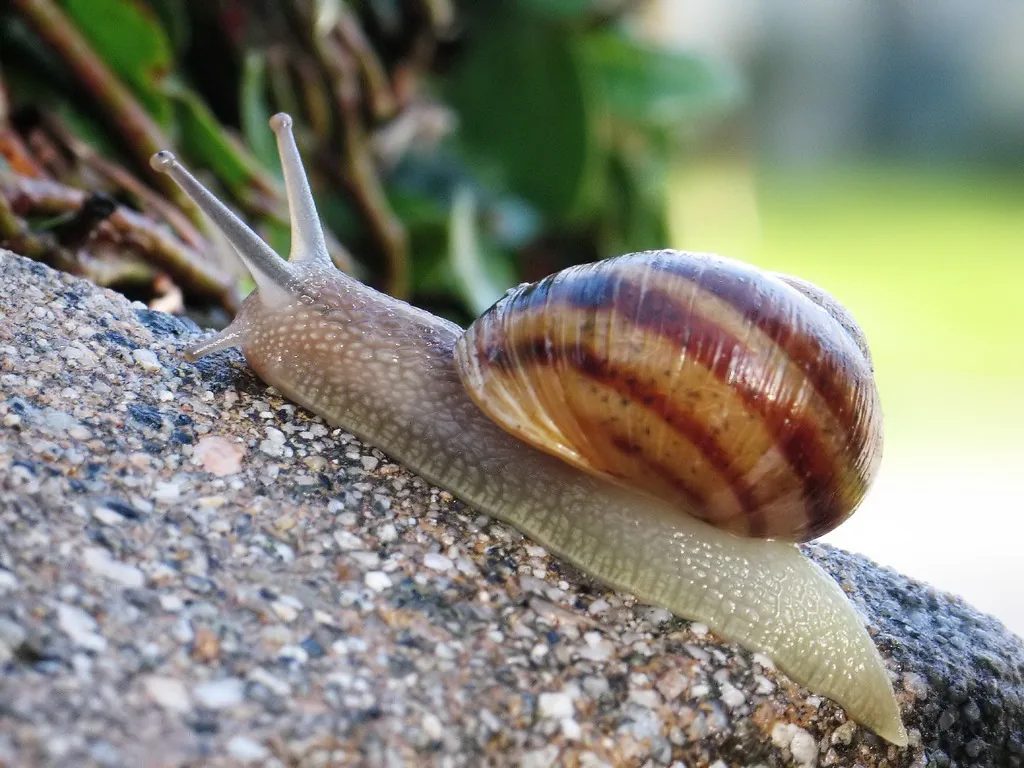
Field Identification
If leaves have ragged holes, seedlings disappear overnight, and you find silvery slime trails on soil and leaves in the morning — snails were there. Snails are slugs with shells, which means they survive drier conditions and are harder to dehydrate than slugs. They hide in shells during dry periods and emerge after rain or irrigation. The shell also makes them slightly slower to move than slugs but better at surviving hostile conditions. In warm humid climates like Florida, snails are active much of the year. The brown garden snail is the most common culprit in most gardens — the same species used as escargot, which gives you options.
Silvery dried slime trails on soil, pots, stems, and leaves are the primary sign. Ragged irregular holes in leaves and missing seedlings overnight. Check under boards, rocks, pot rims, and dense low vegetation during the day — snails cluster in cool damp hiding spots and can be found in numbers. Eggs are small white spheres in clusters laid just below soil surface — check when digging or cultivating. Go out with a flashlight an hour after dark during or after rain and snails will be actively feeding on everything. The spiral shell makes them easier to spot than slugs.
Not sure what you have? Use the symptom diagnosis tool →
How to Deal With It
Organic Control Methods
You do not have a snail problem. You have a duck problem. Ducks — especially Khaki Campbells and Indian Runners — eat snails with genuine enthusiasm and will clear a garden faster than any spray or trap. If ducks are not practical, ground beetles are the most important insect predator of snail eggs and juveniles — permanent undisturbed soil edges and mulch paths support them year-round. Frogs, toads, and garter snakes eat snails actively. Decollate snails (Rumina decollata) are a predatory snail species used as biological control in California citrus — they specifically hunt and eat brown garden snails. Not legal to release in all states — check regulations. Nematodes (Phasmarhabditis hermaphrodita) parasitize snails and slugs in moist soil above 40F (5C).
Snails survive dry periods by sealing themselves inside their shells — they are more resilient than slugs to drying conditions but still prefer moisture and cover. Water in the morning so soil surface dries before evening feeding periods. Remove hiding spots — boards, debris, dense low ground cover, stacked pots. Snails also climb — check walls, fences, and tree trunks near gardens as daytime hiding spots. Copper reacts with snail mucus and deters crossing — copper tape around raised beds and pots is effective for container gardens. Seedlings and tender new growth are highest risk — start seeds indoors and transplant larger more resilient starts.
Hand-pick after dark with a flashlight — snails are easy to spot and collect. Drop into soapy water or salt. Set board traps during the day and collect snails hiding underneath each morning. Beer traps attract snails effectively — shallow containers sunk to soil level and filled with cheap beer, emptied every 2-3 days. If you are in a culinary frame of mind, brown garden snails are edible after a purging period of 1-2 weeks feeding on cornmeal — the French have been doing this for centuries. Garlic, chives, and strongly aromatic herbs at bed edges have some deterrent effect. Rough dry mulches and a dry soil surface strip around beds create conditions snails avoid.
Hand-picking at night after rain is the most efficient population reduction method — snails are slow, visible, and easy to collect in numbers. Copper tape barriers around pots and raised beds work well for permanent container installations. Coarse dry materials — sharp sand, crushed eggshells, diatomaceous earth — as a band around vulnerable plants create physical barriers but must be10 feet of vulnerable plants to eliminate daytime refugia — snails without hiding spots are exposed to predators and desiccation.
Iron phosphate baits (Sluggo, Escar-Go) are the safest and most effective organic option — iron phosphate is safe around pets, wildlife, and beneficial invertebrates and breaks down into fertilizer. Snails consume the bait and die underground within a few days. Scatter lightly around plants rather than piling in heaps. Diatomaceous earth as a dry band damages soft body tissue on contact — must be reapplied after rain. Avoid metaldehyde baits entirely — toxic to pets, birds, hedgehogs, and beneficial ground beetles that are your best long-term snail control. Salt kills snails on contact but damages soil and plant roots — use only in pathways, never near plants.
Let Nature Handle It
Natural Enemies
- Ducks
- Ground Beetles
- Frogs
- Toads
- Garter Snakes
- Decollate Snails
Threat Map