About
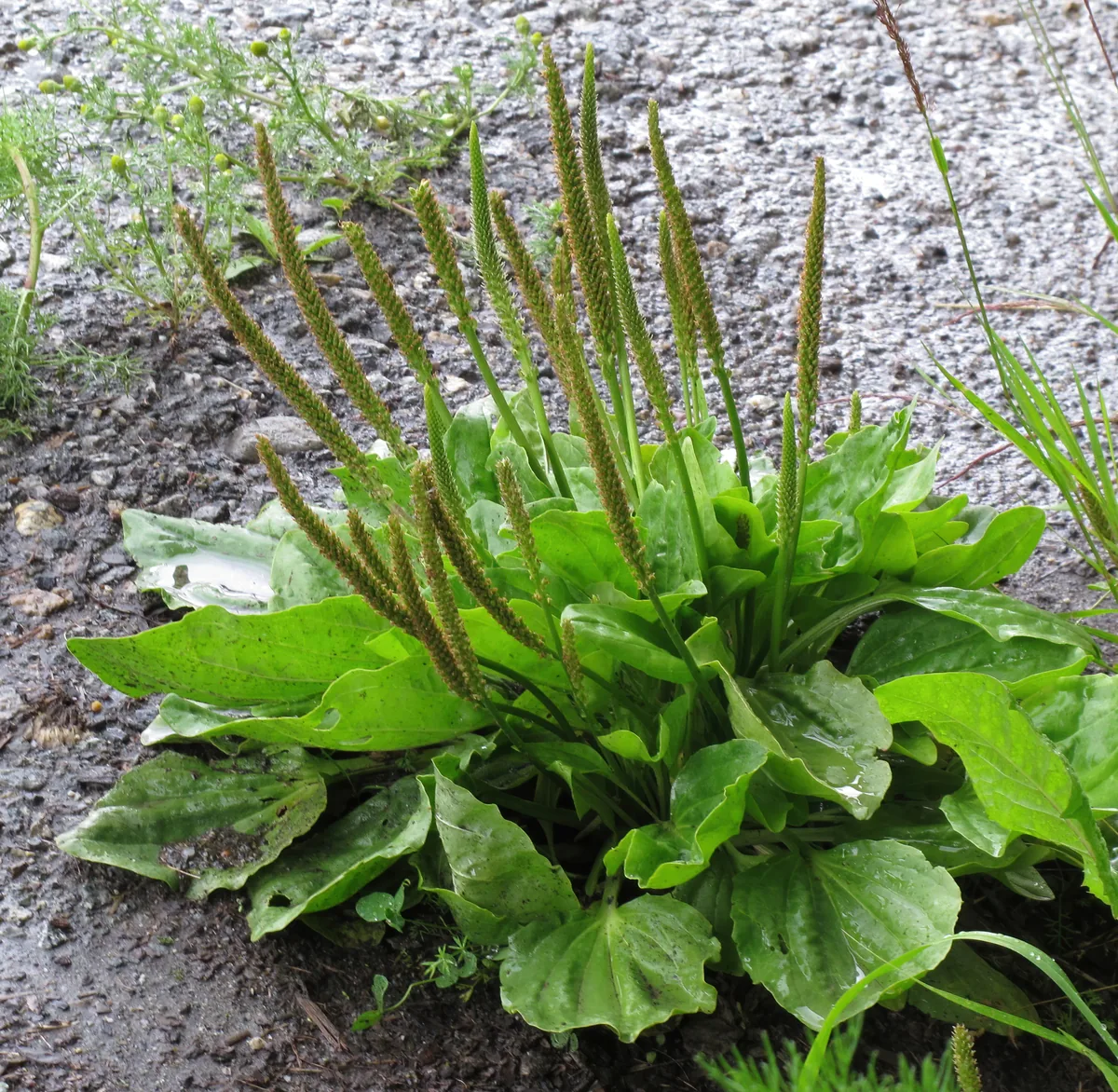
Plantago major is the rosette that colonized sidewalks worldwide—low, ribbed leaves, stringy leaf veins you peel like nature’s dental floss, and flower spikes bees occasionally bother with. Young leaves are mild cooked; older ones need the ‘desperation greens’ mindset. Thrives in cool wet seasons and irrigated lawn dystopia; slows in deep drought but usually rebounds. Not shade-phobic. Full sun to part shade; tolerates compaction and mediocre soil—hence the footprint nickname. Likes consistent moisture but survives dry spells as a sad but alive rosette. Self-sows freely; dig and transplant rosettes; root pieces can resprout—plan accordingly if you wanted it ‘contained.’ Gather young leaves for mild greens; older leaves need the desperation-greens mindset; seeds usable within reason.
Permaculture Functions
- Edible: Young Plantago major leaves cook tender when harvested before flowering; mature ribs stay stringy even after stewing -- psyllium-grade seed harvest needs patience rubbing dry spikes over a screen.
- Medicinal: Chewed leaf poultice uses mucilage to soothe insect stings and nettle rash in the field -- internal use of seed husks for bulk laxative effect is documented; separate spit poultice hygiene from capsule products bought dry.
- Dynamic Accumulator: Roadside rosettes concentrate zinc and potassium in leaf ash tests -- chop before seed rain if you do not want mineral-rich biomass volunteering across the whole path.
- Ground Cover: Low rosettes tolerate foot compaction where turfgrass would demand irrigation -- fills gaps between stepping stones yet lifts easily where you need bare soil again for transplants.
Companion Planting