About
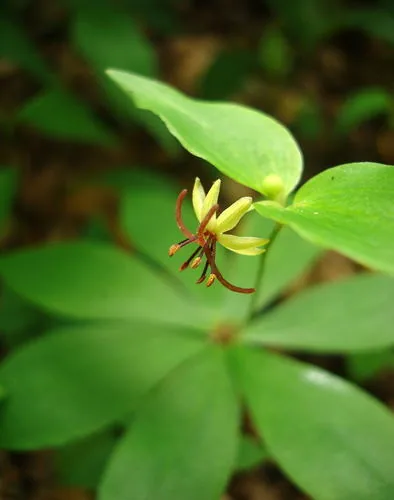
Indian cucumber root (Medeola virginiana) is a woodland perennial of eastern North America, emerging with a single whorl of leaves and later a second tier when flowering, bearing nodding yellow-green flowers and dark berries. The crisp, mild rhizome tastes faintly cucumber-like in tiny ethical samples—overharvest kills colonies, and wild digging is increasingly poor form. Treat it as a conservation understory plant for rich, mesic forests and shade gardens where trilliums set the tone and turf is banned. Dappled shade to full shade; warm spring sun under deciduous canopy is ideal before tree leaf-out deepens shade. Requires moist, well-drained humus soils rich in leaf mold; drought on sandy ridges collapses stands. Cold-hardy through northern temperate winters; heat spikes without soil moisture cause early dormancy. Divide rhizomes carefully in early spring with buds and roots attached—only from cultivated patches. Seeds require cold-moist stratification and patience; germination is slow. Do not harvest wild populations. If tasting cultivated stock, sample pinhead slivers once to learn flavor, then let plants multiply for a decade—this is not a yield crop.
Permaculture Functions
- Edible: Medeola virginiana rhizomes taste faintly of cucumber in pinhead samples -- ethical use means essentially zero harvest from wild colonies; only taste from cultivated patches you are willing to wait a decade to thicken.
- Wildlife Attractor: Dark blue-black berries feed thrushes and small mammals while nodding greenish flowers supply nectar to native bees in deep shade -- leave fruit for wildlife if conservation is the point.
- Ornamental: Two-tiered whorls of lance leaves create a botanical puzzle for shade gardeners -- first-year plants show one whorl, flowering stems add a second story that signals maturity.
- Ground Cover: Rhizomes creep slowly through leaf mold, filling niches between trilliums without forming dense turf -- mulch with deciduous duff, not shredded rubber, so mycorrhizae stay connected.
Companion Planting
Also mentioned as companions:
- Trillium
Not yet profiled in PermiePortal
- Wild harvest collapses local populations—grow from ethical nursery stock and treat as a conservation species, not a snack farm