About
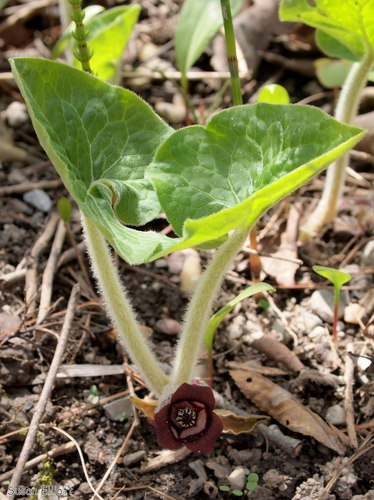
Canadian wild ginger (Asarum canadense) is a low rhizomatous perennial of eastern North American deciduous forests, with fuzzy heart-shaped leaves hugging the ground and odd maroon flowers hidden at the base in spring. It spreads into glossy carpets under shade, rarely exceeding 6 inches (15 cm) tall. In food forests it is a native ground layer for sugar maple–beech–oak moods, feeding early pollinators that know where to look while outcompeting bare soil under shrubs. ☀️💧 Sun and Water Requirements: Full to partial shade; direct midday sun burns leaves. Likes moist, humus-rich, well-drained soils typical of woodland edges; tolerates dry shade once established but grows slower. Mulch with leaf mold to mimic forest floor; avoid standing water around rhizomes. ✂️ Propagation: Divide rhizomes in early spring as shoots emerge; keep pieces with buds and roots. Sow fresh seed after brief warm-cold cycles following regional practice. Transplant plugs under established canopy to reduce shock. 🌾 Harvest / Best Use Timing: Not a bulk crop; traditional uses exist but modern safety guidance varies—research before any ingestion. For ecology, enjoy flowers at soil level with a hand lens and leave rhizomes to spread quietly.
Permaculture Functions
- Ground Cover: Dense leaves exclude weeds in shady strips where grass gives up.
- Ornamental: Glossy foliage beats mulch deserts under trees without English ivy delusions.
- Wildlife Attractor: Flowers target ground-level pollinators early in the growing season.
- Mulcher: Leaves recycle into humus in place when left to decay naturally.
- Medicinal: Historical herbal references exist; modern use demands expert identification and safety review.
Practitioner Notes
- Flowers hide at ground level—if you never see blooms, you are not looking low enough.
- Transplant in cool wet weather; dry sun shock turns leaves to potato chips fast.
- Spread is polite, not instant—mulch gaps the first year while rhizomes map the territory.
- Deer may sample; dense patches often persist through light browsing pressure.
Companion Planting
- Bloodroot — spring ephemerals share deciduous shade timing before canopy closure
- Ostrich Fern — taller fronds contrast low ginger mats in moist woodland gardens
- Maidenhair Fern — delicate texture pairing for shaded, humid microsites
- Confusion with unrelated plants named wild ginger — botanical ID matters before any use
Pest Pressure