About
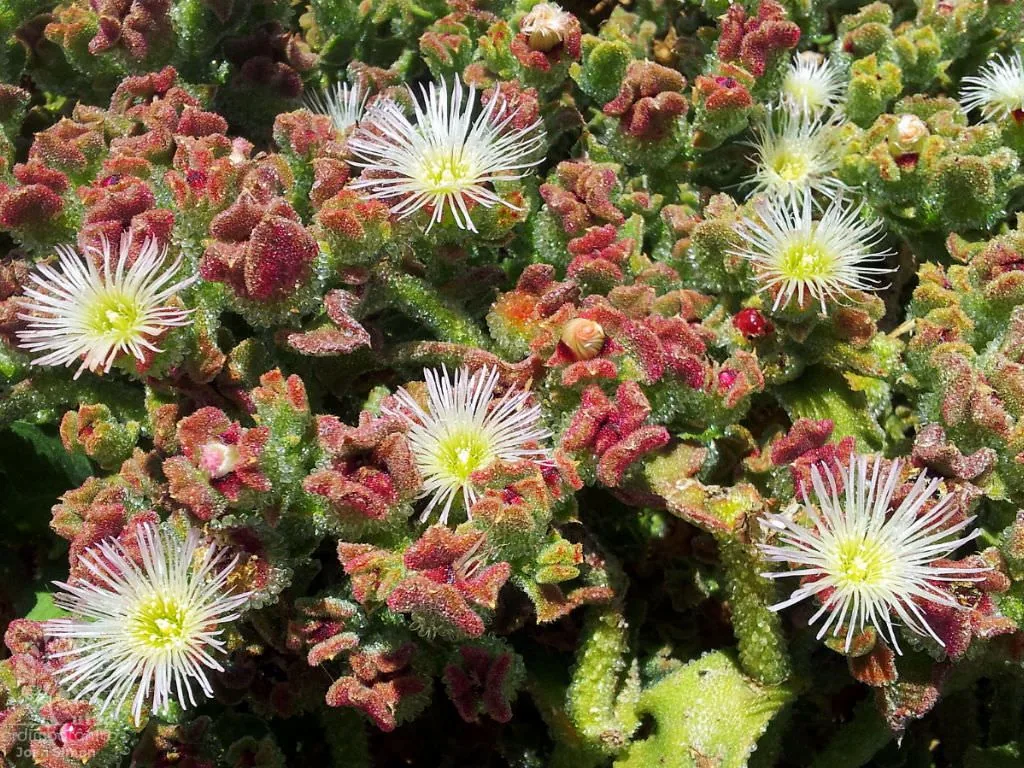
Ice plant (Delosperma cooperi) is a perennial succulent characterized by its thick, fleshy leaves covered with crystalline water-storing structures that shimmer like ice crystals in sunlight, hence its name. It forms a dense, mat-like growth that effectively suppresses weeds, spreading quickly to cover bare ground. The leaves are edible and have a mildly salty taste, often used fresh in salads or as a garnish. Ice Plant prefers full sun and thrives in well-drained, sandy, or rocky soils. It tolerates drought exceptionally well and requires minimal watering once established, needing only occasional irrigation during prolonged dry spells. Ice Plant propagates easily from stem cuttings or seeds. Cuttings root quickly in moist, sandy soil and usually establish within 2-3 weeks. Harvest young, tender leaves continuously as needed during the growing season, typically spring through early fall. Leaves taste best when harvested young.
Permaculture Functions
- Edible: Delosperma cooperi leaves are mildly salty, juicy, and safe in small fresh salads -- harvest young segments because older tissue turns tougher and more astringent in heat.
- Medicinal: Succulent tissue cools skin when crushed for minor sunburn or insect bites in camp settings -- it is first aid, not pharmacy, and clean ID matters because other ice plants differ in chemistry.
- Ground Cover: Mat-forming stems root as they creep, knitting gravel mulch and crowding out annual weeds -- tight spacing reads as a living grout between flagstones where irrigation is spare.
- Erosion Control: Thick chubby leaves armor soil on slopes and green roofs -- pair with sharp drainage so winter wet does not rot crowns in cold zones.
- Border Plant: Low cushions edge paths without blocking sight lines -- mass mixed colors for long-season bloom because individual mats stay under six inches tall.