About
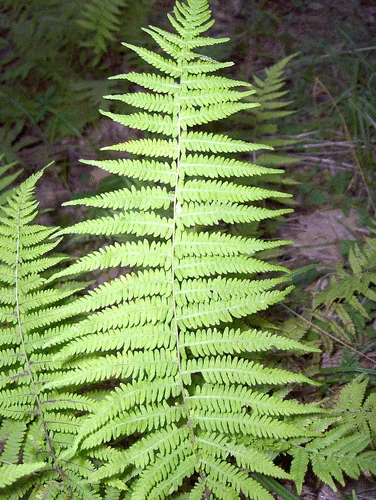
Marsh fern (Thelypteris palustris) is a clump-forming deciduous fern of wet woods, seeps, and marsh edges across much of North America and parts of temperate Eurasia. Fronds are lance-shaped, deeply lobed, and rise from creeping rhizomes that knit damp soil. It fills a niche in restoration and food forests where standing water is rare but soil stays spongy for much of the year. Part shade to light shade; tolerates brief sun only if roots stay cool and moist. Moisture-loving; prefers consistently damp, humus-rich soil that never dries to dust. Tolerates seasonal flooding better than drought; acidic to neutral pH is typical in its native sites. Division of crowns in early spring before fiddleheads unfurl; keep divisions wet. Spore sowing on sterile moist medium under humidity dome; gametophyte stage is slow and needs patience. Transplant young clumps into prepared bog gardens or rain-garden berms with mulch to lock moisture. Fronds are not a food crop; value is ecological and visual. For nursery increase, lift divisions after last hard frost when new croziers appear. In design, mass plant in year two once irrigation rhythm is proven—dry spells brown fronds fast.
Permaculture Functions
- Ground Cover: Thelypteris palustris rhizomes creep through wet muck into knee-high frond colonies -- shade and constant moisture are non-negotiable; xeric berms crisp it in weeks.
- Wildlife Attractor: Dense fronds shelter spring peepers and damselflies at pond toes -- leave litter undisturbed if amphibian cover matters more than tidy mulch.
- Erosion Control: Fibrous mats bind rain-garden swales where intermittent inundation would wash bare soil -- pair with sedges upslope for two-height stabilization.
- Ornamental: Lance-shaped, deeply lobed fronds read clean in teaching wetlands -- contrast with broad royal fern behind for layered texture.
Companion Planting
Threats & Pressure