About
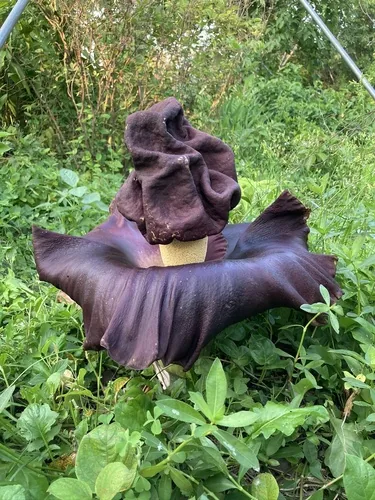
Elephant foot yam is the Amorphophallus you grow for food, not just for the novelty corpse-flower gossip—massive tuber, single umbrella leaf on a speckled petiole, and an inflorescence that will win any ugly contest you host. The corm is a staple starch in parts of Asia when properly processed. Possible as a summer spectacle in 9b with winter-dry dormancy protection; mulch heavy over dormant corms during cold snaps. Tropical growers have the boring easy mode. Bright shade to dappled sun; avoid blasting noon sun on fresh leaves. Rich, moist, well-drained soil during growth; keep dormant corms from rotting in cold wet. Offset cormels, division of main corm with clean tools, or seed for the patient and curious. Corm harvest follows cultural processing knowledge for your region; single leaf collapses into mulch at season’s end.
Permaculture Functions
- Edible: Amorphophallus paeoniifolius corms yield tropical staple starch only after thorough cooking to knock down calcium oxalate raphides -- dig when the single seasonal leaf yellows and store dormant corms dry above 55°F to avoid black rot in 9-11.
- Ornamental: One speckled petiole unfurling into a patio-scale umbrella leaf -- or a corpse-flower inflorescence season -- reads as honest aroid spectacle in humid summer food-forest understories.
- Mulcher: Collapsing petiole sheaths and spent spathe tissue fold straight into compost when dormancy begins -- returning the season's potassium pulse before you lift the mother corm for division.
Companion Planting