About
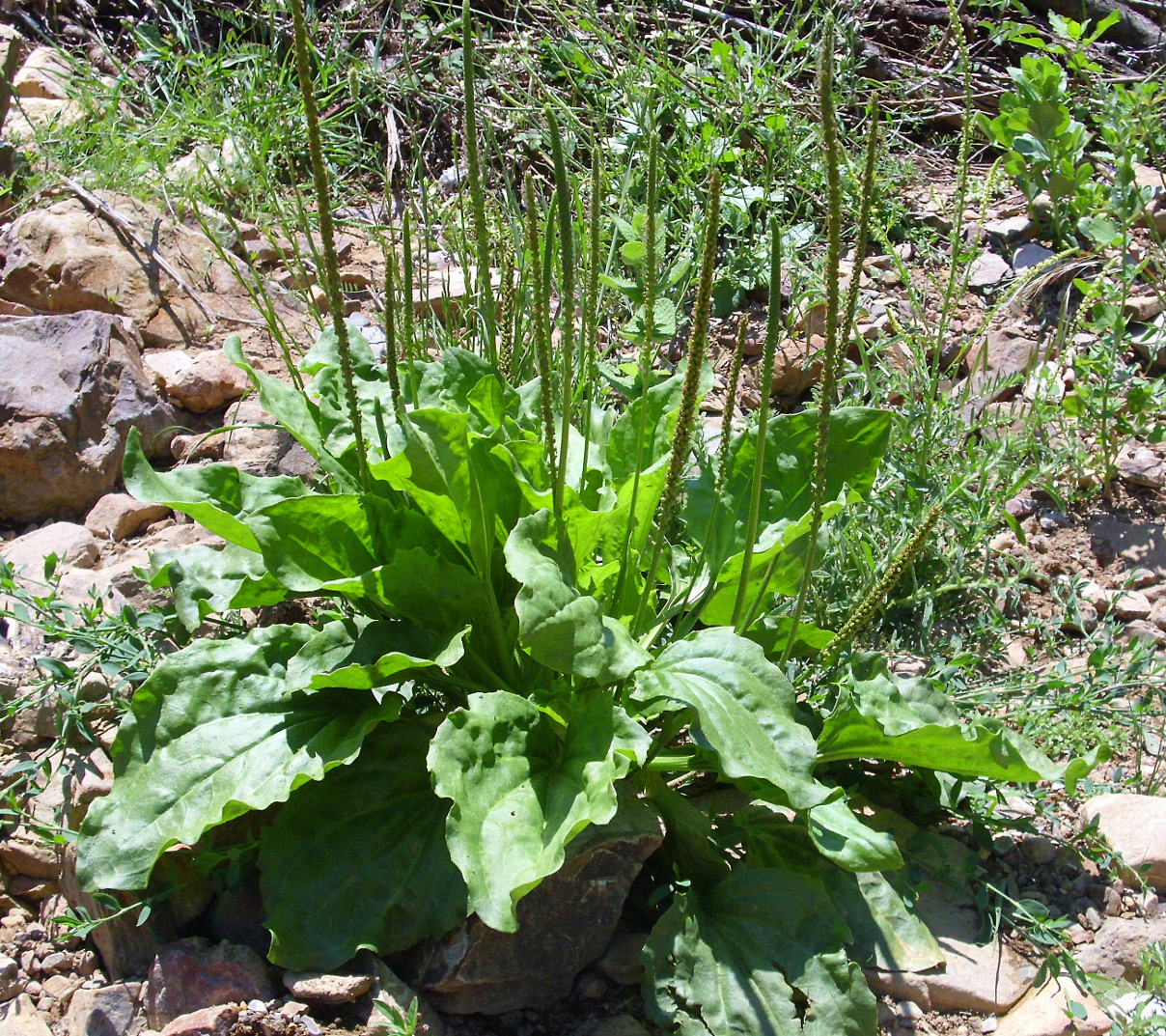
Plantain (Plantago major) is a herbaceous perennial plant native to Europe and Asia, now widespread globally. It forms a rosette of broad, oval leaves measuring 5–20 cm long and 4–9 cm wide, with prominent parallel veins. The plant produces slender, unbranched flower spikes up to 15 cm tall, bearing small, inconspicuous, greenish-white flowers. Plantain thrives in compacted, disturbed soils and is commonly found in lawns, fields, roadsides, and other areas impacted by human activity. 🌞💧 Sun and Water Requirements: Plantain grows best in full sun to partial shade. It is adaptable to various soil types, including nutrient-poor and compacted soils, and tolerates a range of moisture conditions, from dry to moist environments. ✂️🫘 Methods to Propagate: Plantain propagates primarily through seeds. Collect seeds from mature flower spikes and sow them directly onto the soil surface in spring or fall. Lightly press the seeds into the soil without covering them, as they require light to germinate. Keep the soil consistently moist until germination occurs. 🧑🌾👩🌾 When to Harvest: Harvest young, tender leaves in spring and early summer for culinary or medicinal use. Leaves can be used fresh or dried for later use. Seeds can be collected in late summer to early fall when the flower spikes mature and turn brown.
Permaculture Functions
- **Edible: ** Young plantain leaves are edible and can be consumed raw in salads or cooked as a leafy green. The seeds are also edible and can be ground into flour or added to other foods.
- **Medicinal: ** Plantain has a history of use in traditional medicine for its anti-inflammatory, antimicrobial, and wound-healing properties. It has been applied topically to treat cuts, insect bites, and skin irritations, and taken internally for respiratory and digestive issues.
- **Ground Cover and Erosion Control: ** Plantain's low-growing, rosette form and fibrous root system make it effective for ground cover and soil stabilization, helping to prevent erosion.
- **Dynamic Accumulator: ** Plantain accumulates nutrients such as calcium and potassium, enriching the soil when its biomass decomposes.
Practitioner Notes
- Harvest texture changes faster than color—nip one sample before you commit the whole row to a pick date.
- Label jars with plant part and date the day you seal—future you is not psychic.
- Shear ragged mats after heat waves; two weeks of ugly beats six months of thatch rot.
- Watch the plant’s own signals first—catalog zone numbers do not replace your site’s microclimate truth.
Companion Planting
- Clover
- Dandelion
- Yarrow
- None known
Pest Pressure