About
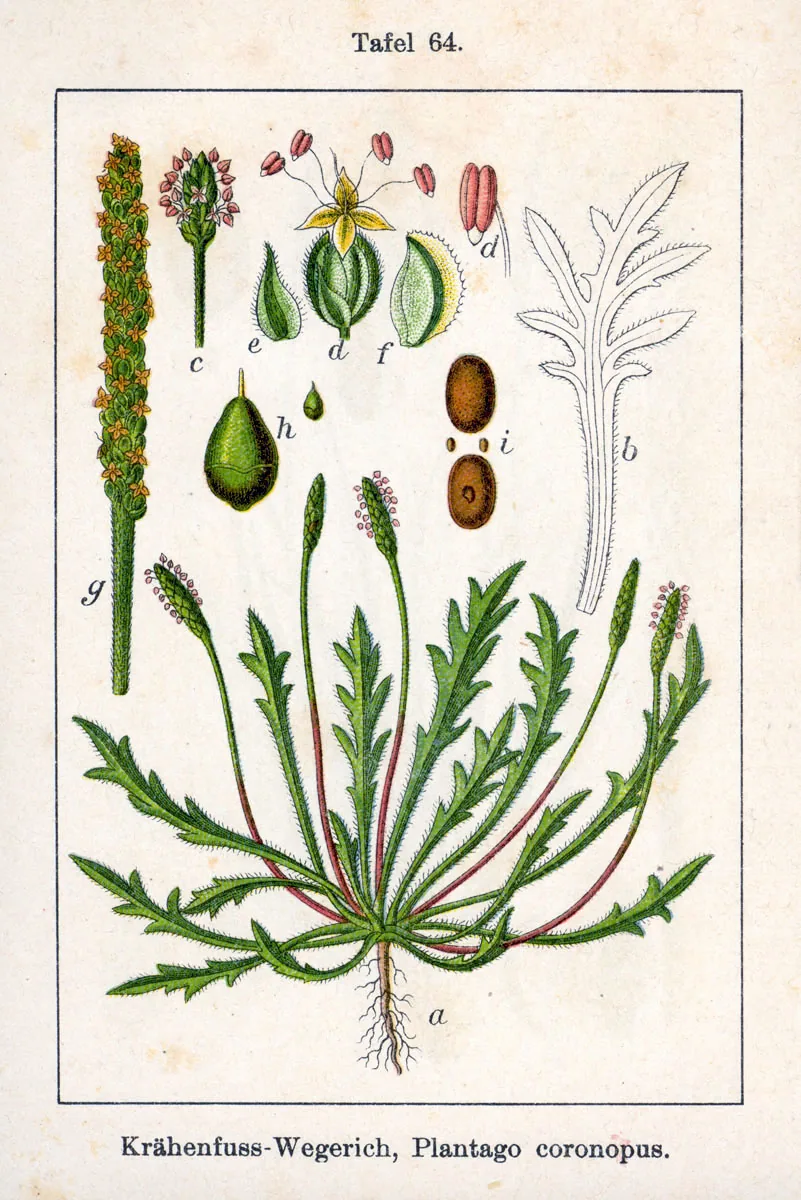
Buck plantain (Plantago coronopus) is a low, rosette-forming plant with narrow, toothed leaves that look a bit like antlers — hence the horn names. Young leaves are a salty, mineral-rich salad green; older foliage gets tougher but still works chopped into soups or as livestock forage. It tolerates poor, compacted soil and is a classic "pavement weed" that permies reclaim as food. In subtropical and tropical Americas it behaves like a cool-season hero: happy through winter and early spring, then often burning out or going to seed once the real heat sets in. Let it bolt if you want free seed for next year. Full sun to light shade. Average moisture; tolerates short dry spells once roots are down. Not fussy about soil; sand to clay if drainage is not a swamp. Seed: direct-sow in fall or early spring; lightly cover. Self-sows freely where happy — thin volunteers or transplant rosettes while small. Snip tender Buck Plantain growth in cool mornings for best texture -- heat-stressed leaves taste like their day job. Flowers at full color for peak volatiles; seeds when pods rattle but before they self-sow across paths. Dry herbs in thin layers; deep piles steam themselves into compost.
Permaculture Functions
- Edible: Plantago coronopus young toothed leaves taste mineral-salty in cool weather salads, then toughen -- once rosettes bolt in late spring heat.
- Medicinal: Crushed fresh leaf goes straight onto nettle stings or mosquito welts -- in camp practice, same mucilage play as broadleaf plantain but with narrower foliage.
- Dynamic Accumulator: Deep taproots pull calcium and magnesium into leaf tissue tests on compacted drive edges, handy -- if you compost culls back onto the same gravelly bed.
- Animal Fodder: Rabbits and laying hens strip rosettes in runs without belly bloat issues you see -- on pure lettuce dumps.
- Border Plant: Low antler rosettes line path stones where mower wheels skip, surviving salt splash better -- than many broadleaf weeds.
Companion Planting