About
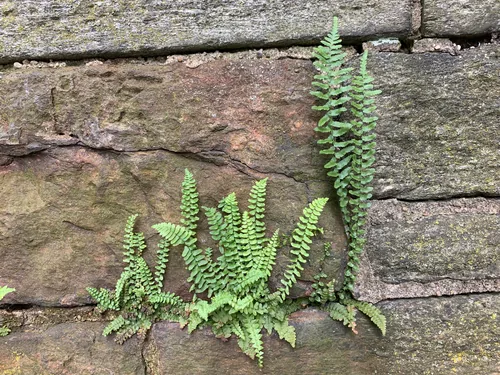
Ebony spleenwort (Asplenium platyneuron) is a diminutive evergreen fern with dark, glossy stipes and narrow, once-pinnate fronds, common in thin soil over rock from eastern North America into parts of Mesoamerica. It colonizes limestone chips, old mortar, and woodland edges where other plants demand deeper humus. In design, it is a living grout for rock gardens, retaining walls, and shaded paths—low input, high texture, and allergic to fertilizer cosplay. Partial shade to shade; tolerates bright shade on moist rock. Prefers well-drained, circumneutral to basic soils derived from limestone; also grows on acidic rock with enough crevice organic matter. Keep evenly moist but not soggy; drought causes frond tip burn. Avoid heavy bark mulch smothering crowns. Spores sown on sterile medium under humidity domes produce gametophytes over months—patience is equipment. Carefully divide small clumps with root and rhizome intact during cool, moist weather. Do not wild-dig large patches—transplant only rescue material with permission. In gardens, refresh mulch lightly in cool seasons and remove winter-damaged fronds before spring growth.
Permaculture Functions
- Ornamental: Asplenium platyneuron keeps dark glossy stipes and narrow evergreen fronds -- for year-round crevice texture.
- Ground Cover: Small colonies tile gaps between stones and wall caps -- where soil is only a few millimeters deep.
- Erosion Control: Fibrous roots bind crumbs of organic matter in limestone joints -- reducing wash from summer storms.
- Wildlife Attractor: Layered fronds shelter springtails, spiders, and other microfauna -- in shaded rock gardens.
Companion Planting
Also mentioned as companions:
- Christmas Fern
- Columbine
Not yet profiled in PermiePortal
- Heavy clay relocation without rock crevices—crowns rot where drainage is poor and winter wet lingers