About
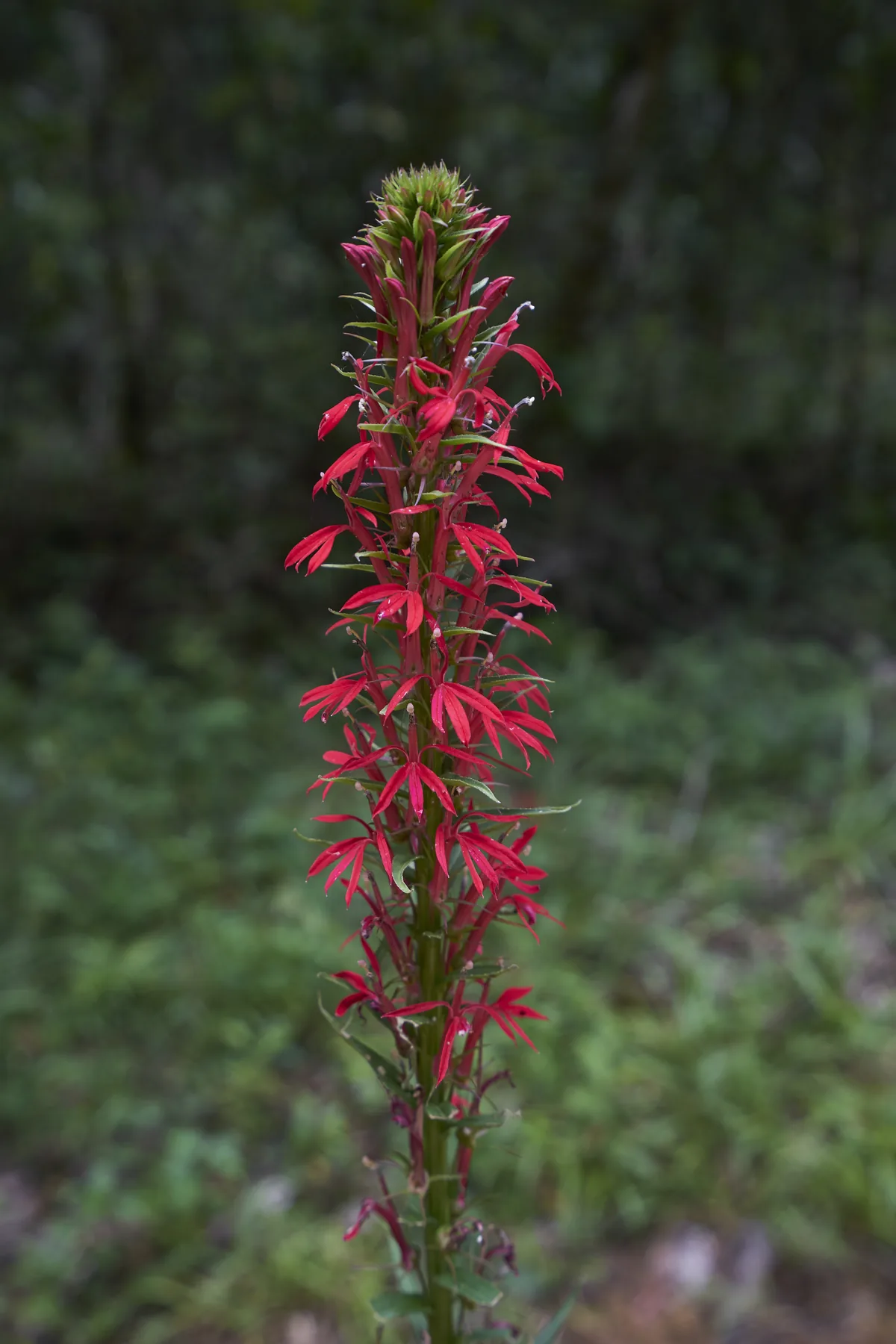
Cardinal flower is the hummingbird magnet of wet ditches—scarlet spikes, lance leaves, and a love language written in milliliters of nectar per minute. Short-lived as individual plants in some settings but seeds in like it owes you rent. Native in northern counties; central/south populations exist in appropriate wetlands. Give it moisture and some midday shade inland. Sun to part shade. Consistent soil moisture—pond edge, rain garden, or soaker zone. Mulch keeps roots cool. Seeds (tiny, surface sow); division of basal rosettes in cool seasons. Leave spikes for hummingbirds unless ethics and local rules cover cut-flower harvest; seeds ripen for collection if you are expanding plantings.
Permaculture Functions
- Pollinator: scarlet two-lipped tubes hide copious nectar that ruby-throated hummingbirds defend -- while long-tongued bees steal side access on wet-season mornings.
- Wildlife Attractor: basal rosettes and seeding spikes line pond margins -- where hummingbirds, butterflies, and damselflies hunt along the same constant soil moisture band.
- Ornamental: vertical inflorescences give saturated rain gardens and stream banks a saturated-red vertical accent without needing standing water -- if mulch keeps roots cool.
Companion Planting
Good Neighbors
Cautions
- Dry berms
- Deep shade that prevents bloom