About
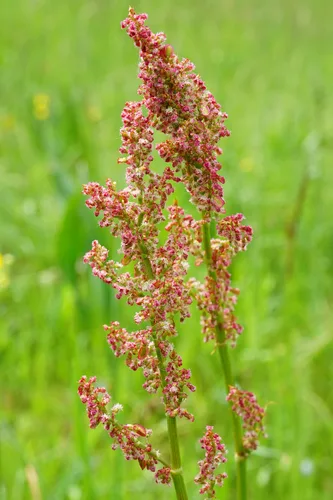
Sorrel (*Rumex acetosa*), also known as Garden Sorrel or Common Sorrel, is a perennial herbaceous plant native to Eurasia and commonly found in grassland habitats. It typically reaches heights of up to 60 centimeters (24 inches), featuring slender, juicy stems and arrow-shaped (sagittate) leaves that grow from a rosette. The lower leaves are 7 to 15 centimeters (2.8 to 5.9 inches) in length with long petioles, while the upper leaves are sessile and often turn crimson. Sorrel produces whorled spikes of reddish-green flowers in early summer, which later become purplish. The plant is dioecious, meaning individual plants are either male or female. It thrives in moist, well-drained soils and can grow in poor soil conditions. Sorrel is commonly propagated by seeds or division. Seeds can be sown directly into the soil in early spring or late summer, about 1 centimeter (0.4 inches) deep, spaced 30 centimeters (12 inches) apart. Germination occurs within 7 to 14 days. For division, mature plants can be split in early spring or autumn, ensuring each section has roots attached, and then replanted immediately. Sorrel prefers full sun to partial shade and thrives in moist, well-drained soils rich in organic matter. Regular watering is essential, especially during dry periods, to maintain soil moisture and prevent the leaves from becoming tough and bitter. Harvest young, tender leaves when they are about 10 to 12 centimeters (4 to 5 inches) long, starting 8 to 10 weeks after planting. Continuous harvesting of outer leaves encourages new growth. Avoid harvesting all the leaves at once to allow the plant to continue producing. The leaves are best used fresh but can be stored in the refrigerator for up to a week.
Permaculture Functions
- Edible: Rumex acetosa spear-shaped leaves carry oxalic zip for spring soups -- blanch generously if kidneys already fight stone chemistry.
- Medicinal: European herbals leaned on cooled sorrel teas for bowel support -- confirm modern contraindications before therapeutic daily quarts.
- Ground Cover: Low rosettes elbow out chickweed along moist partial-shade paths -- where mowing skips.
- Wildlife Attractor: Tiny green flower spikes feed small pollinators -- while copper skipper larvae chew leaves thin enough to spot mines from the path.
Companion Planting
- None reported
Threats & Pressure