About
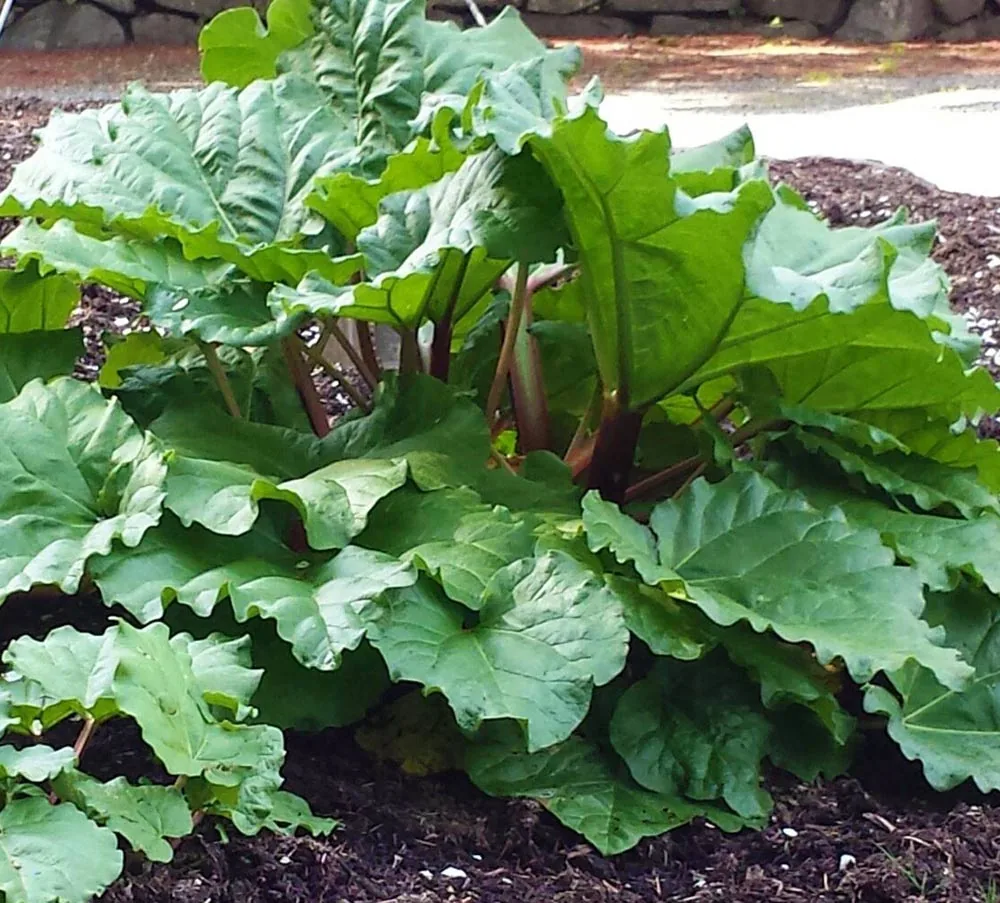
Rhubarb (*Rheum × hybridum*) is a robust, herbaceous perennial known for its large, triangular leaves and thick, fleshy petioles (stalks) that range in color from green to deep red. The plant can reach up to 1 meter (3 feet) in height and width. Notably, while the stalks are edible and prized for their tart flavor, the leaves contain high levels of oxalic acid and are toxic if consumed. Rhubarb thrives in well-drained, fertile soils with a slightly acidic to neutral pH (6.0-7.0) and requires a period of winter dormancy with temperatures below 40°F (4°C) to stimulate vigorous spring growth. Rhubarb is commonly propagated through crown division. In early spring or late fall, select a healthy, established plant and carefully dig it up. Using a sharp, clean knife, divide the crown into sections, each containing at least one strong bud and a portion of the root system. Replant the divisions promptly, spacing them about 90-120 centimeters (3-4 feet) apart to allow for mature growth. Rhubarb flourishes in full sun, requiring a minimum of 6-8 hours of direct sunlight daily. In hotter climates, partial afternoon shade can help prevent stress. Consistent moisture is essential; provide approximately 2.5 centimeters (1 inch) of water per week, adjusting for rainfall. Mulching around the base helps retain soil moisture and suppress weeds. Refrain from harvesting rhubarb during its first growing season to allow the plant to establish. In the second year, harvest lightly, selecting only a few stalks. By the third year, a full harvest can commence. Harvest period typically spans 8-10 weeks, starting in spring. To harvest, grasp the base of the stalk and pull it away with a gentle twist. Avoid cutting the stalks, as this can leave a stub prone to decay. Cease harvesting by early summer to enable the plant to rebuild energy reserves for the next season.
Permaculture Functions
- Edible: Rheum × hybridum thick petioles cook into pies, compotes, and fermented kvass with malic acid snap while leaf blades stay oxalate-toxic -- pull stalks with a twist, never harvest all leaves on a crown the first season.
- Mulcher: Elephant-ear leaves layer mulch under currants and cane fruit when slashed after frost -- decompose fast into black humus unless you stack them anaerobic-deep; chop stems separately for drier carbon.
- Erosion Control: Massive crowns and thick roots anchor barnyard berms and orchard slopes where winter rains sheet -- plant on contour swales with comfrey downhill to catch nutrient leachate honestly.
Companion Planting
Also mentioned as companions:
- Brassica
Not yet profiled in PermiePortal
- Fennel
- Black Walnut
Threats & Pressure