About
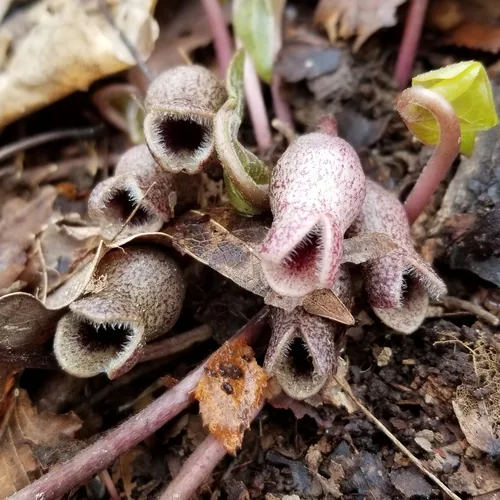
Little brown jug (Hexastylis arifolia) is a low evergreen woodland perennial of acidic eastern North American forests, with heart-shaped or arrow-shaped leaves and odd brownish jug-shaped flowers hidden at ground level. Spreads by rhizomes into quiet mats a few inches tall. It is a native shade groundcover for naturalistic plantings where ephemerals need a calm evergreen base. Shade to dappled sun; direct midday sun burns leaves. Moist, organic, well-drained acidic soils typical of oak-pine woods; tolerates dry shade once established but not desert drought. Mulch with leaf mold, not dyed chunks. Divide rhizomes in early spring or fall; keep divisions moist. Sow fresh seed after cleaning; germination is slow and shady in personality. Avoid frequent disturbance once colonies stabilize. Ornamental use is primary; flowers are cryptic treasures for kneeling botanists. Leave leaf litter for amphibians and soil fauna—power-blowing every week is hostile architecture. Edit spread at edges if paths are invaded.
Permaculture Functions
- Ground Cover: Hexastylis arifolia rhizomes spread into glossy evergreen mats under oak shade -- tolerates dry shade once established but hates alkaline soil and chronic sun bake.
- Ornamental: Brownish jug-shaped flowers hug the litter layer for pollinators willing to crawl -- kneel to appreciate them because smartphone zoom misses the velvety texture.
- Wildlife Attractor: Low cover shelters salamanders and litter arthropods when leaf mulch stays put -- stop blower-only hygiene if you want the ground stratum to function.
Companion Planting
- Dry windy sun — leaves crisp; this is a shade creature, not a beach hero
- Alkaline soils — chronic decline; fix pH or pick native sedges instead