About
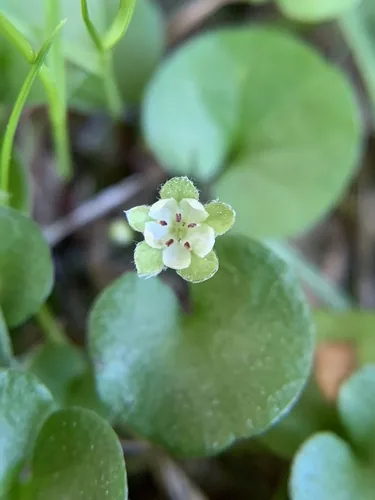
Carolina ponysfoot (Dichondra carolinensis) is a native, creeping perennial herb of warm-temperate to subtropical North America, forming mats of small kidney-shaped leaves on slender stems that root at nodes. It hugs soil in partial shade to sun with adequate moisture, filling gaps between pavers, pond edges, and low shade paths where turf struggles. Height stays under a few inches, spreading widely in favorable microclimates. Partial shade to full sun in humid climates; afternoon shade reduces scorch in hot dry sites. Consistent moisture produces the lushest mats; drought induces dormancy or browning. Well-drained but water-retentive soil is ideal; salty irrigation water can burn margins. Divide mats in spring; keep moist until rooted. Take stem cuttings with nodes and root in humid shade. Allow controlled spread from plugs into prepared gaps—edging may be needed near formal beds. Occasionally grazed as a minor edible green in some traditions—verify identity and cleanliness before tasting. For groundcover, trim ragged edges with shears after winter damage; top-dress thin areas with compost in wet season to speed fill.
Permaculture Functions
- Ground Cover: kidney-shaped leaves root at nodes to form walk-soft mats that exclude weeds between pavers and pond edges -- where turf refuses honest work.
- Ornamental: silver-green coin foliage threads through flagstone and rain-garden voids with a clover-like look -- yet stays lower than most turf alternatives in humid sun.
- Erosion Control: interwoven stolons knit sandy berms and gentle pond banks after wet-season rains -- when rooted plugs spread into continuous living geotextile.
- Wildlife Attractor: humid carpets shelter tree frogs, wolf spiders, and predatory beetles -- that patrol mulch seams in moist subtropical courtyards.
Companion Planting
Also mentioned as companions:
- Dwarf Mondo Grass
Not yet profiled in PermiePortal
- Foot traffic — not a sports lawn substitute; breaks down under heavy compaction
- Winter cold — marginal in cooler zone 7 without protected microsites
Threats & Pressure