About
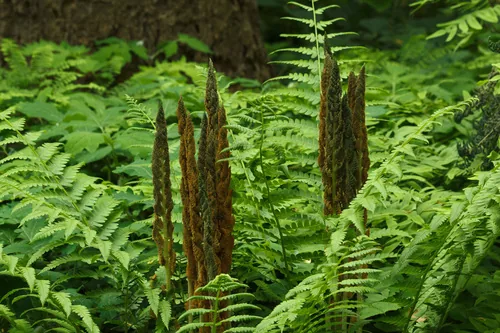
Cinnamon fern (Osmundastrum cinnamomeum) is a statuesque deciduous fern of eastern North American wetlands and moist woodlands, producing a separate fertile frond that stands upright like a cinnamon stick among broad green sterile fronds. Clumps reach 2–4 feet (60–120 cm) or taller in ideal muck, spreading slowly by rhizome. The dense crowns shelter amphibians and create vertical structure in rain gardens and shaded pond margins from cool-temperate to warm-humid climates. Partial to full shade; tolerates morning sun only where soil stays wet. Requires consistently moist, acidic, organic soil; thrives in seeps and floodplain edges. Will not persist on dry berms without irrigation. Divide crowns in early spring when fiddleheads emerge but before heavy growth. Sow spores on sterile medium for advanced propagation. Transplant with generous soil around fibrous roots. Fiddleheads of Osmundastrum are not the commercial ostrich fern crop—do not confuse species if experimenting with food. For gardens, leave fertile stalks for winter texture unless they collapse untidily; cut in late winter before spring growth.
Permaculture Functions
- Ornamental: Sterile fronds arch wide -- while upright cinnamon-colored fertile spikes give bog gardens a vertical exclamation mark no hosta mimics.
- Mulcher: Deciduous fronds collapse into acidic duff that feeds millipedes, fungi, and soil mesofauna -- in seeps and floodplain edges.
- Wildlife Attractor: Wet crowns shelter tree frogs, salamanders, and aquatic insect larvae -- that need constant moisture and leaf litter refuges.
- Water Retention: Deep fibrous roots and spongy rhizomes hold rainfall in rain-garden cells and pond shelves -- where grading keeps soil saturated between storms.
Companion Planting
- Drought — rapid collapse if rain gardens are misgraded and dry between storms
- Full afternoon sun — scorch except in constantly wet soil