About
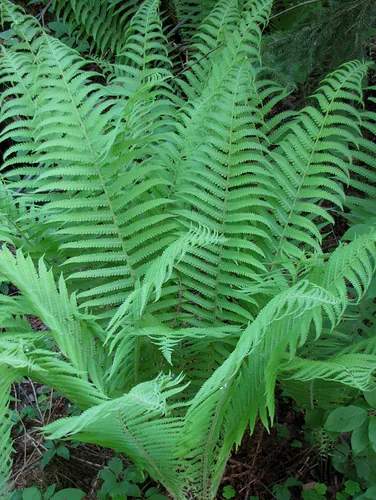
Ostrich fern forms big, vase-shaped clumps of bright green sterile fronds with edible "fiddleheads" in spring—**only** harvest species you have positively identified; some ferns are not brunch. The brown fertile fronds persist like little woody flags after the green blades die back. It wants cold winters and cool, moist soils; humid lowland tropics sit south of its happy place unless you simulate mountain creek conditions and accept marginal performance. Part to full shade; rich, moist, slightly acidic soil with steady humus. Never let a clump dry to dust in summer if you want lush crowns. Division of crowns in early spring; spores (slow, specialist fun); transplant rhizome sections with buds. Fiddlehead patches are long-term investments, not instant noodles. Harvest fiddleheads only with positive ID and local tradition; spring flush is the edible window.
Permaculture Functions
- Edible: Coiled Matteuccia struthiopteris fiddleheads blanch or pickle after positive ID against toxic look-alikes like bracken -- cook thoroughly even when ID is solid because thiaminase and microbial loads both matter on spring flush.
- Ornamental: Bright green sterile fronds rise in ostrich-plume vases along shaded creek margins and rain-garden toes -- brown persistent fertile fronds add winter vertical texture when you skip aggressive cleanup.
- Erosion Control: Tough black rhizome mats knit leaf-litter banks on cold-water streams where freeze-thaw sloughs sediment -- avoid planting in steamy lowland tropics where crowns rot without honest chill.
- Wildlife Attractor: Wet shade architecture shelters salamanders, spring peepers, and detritivore food webs under frond skirts -- fiddlehead harvest patches should rotate so wildlife corridors keep intact litter depth every year.
Companion Planting
Also mentioned as companions:
- Trout Lily
- Solomon's Seal
Not yet profiled in PermiePortal
- Blazing full sun
- Dry sand
Threats & Pressure