About
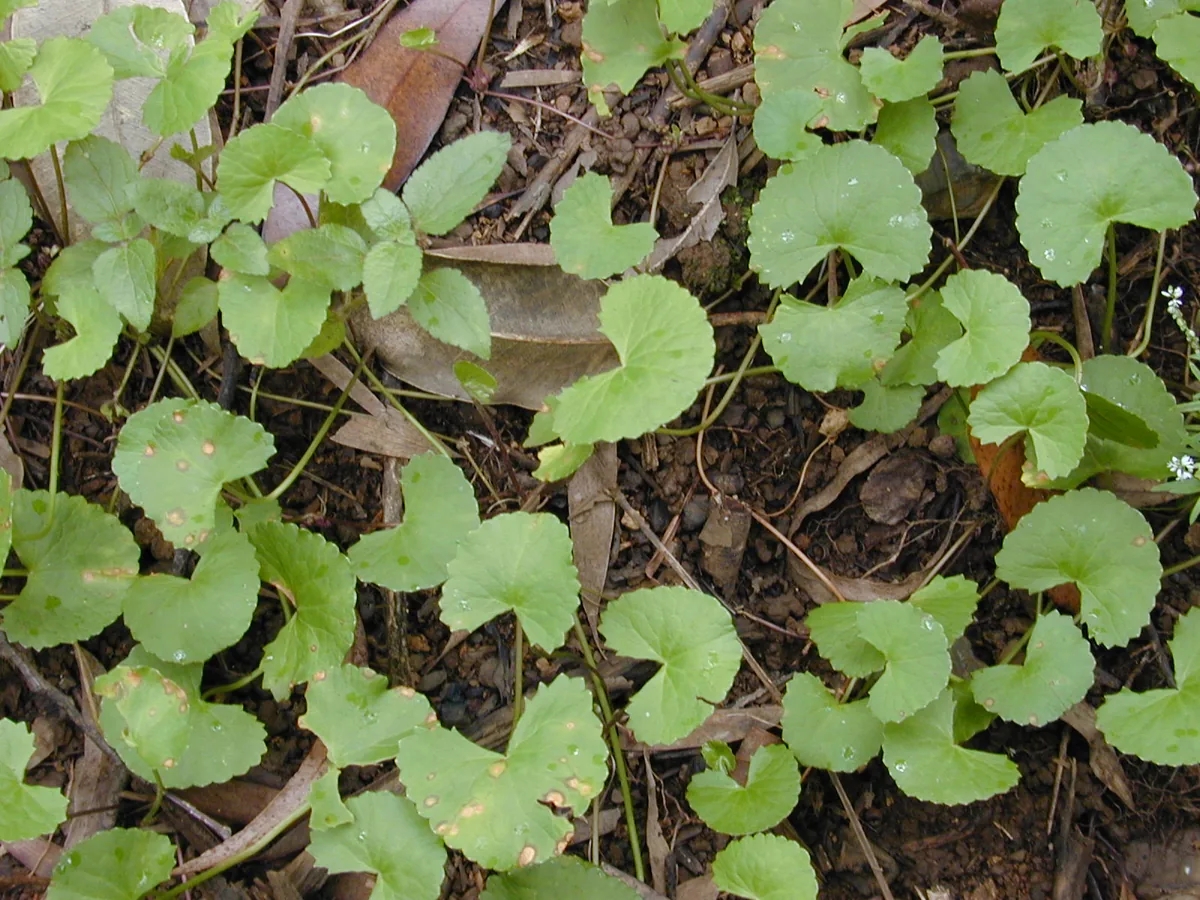
Gotu kola is a low, creeping perennial herb with kidney-shaped leaves on thin stems that roots freely at nodes—classic moist-shade groundcover energy. It is widely used as a mild salad green and in traditional herbal systems; PermieBro translation: respect the plant, do not turn it into a wellness grift. In subtropical subtropical and tropical Americas it runs year-round in protected, damp spots; hard freezes can brown it, but it often rebounds from the roots. Part shade to dappled sun; tolerates more sun if soil stays consistently moist. Likes steady moisture and humus—think bog-adjacent, not swamp-in-a-pot. Good drainage still matters to avoid anaerobic funk. Container culture works if you refuse to let it dry out. Division: tear a mat apart; any piece with stem nodes contacts soil and roots. Stem cuttings laid on moist medium root in days. Seed is possible but slow and uneven; vegetative propagation is what people actually do. Snip young leaves and short stems anytime; frequent harvest keeps growth tender. Avoid harvesting from questionable roadside sites—heavy metals and dog traffic are not seasoning.
Permaculture Functions
- Edible: Centella asiatica leaves and short stems are mild, slightly bitter salad greens and soup herbs -- harvest young tips from clean, uncontaminated beds, not roadsides where heavy metals ride along as unwanted seasoning.
- Medicinal: Traditional Asian systems use the herb for skin repair and cognitive support teas -- modern trials focus on triterpenoids in the leaves; check drug interactions and pregnancy cautions before internal use.
- Ground Cover: Creeping stems root at nodes to form a dense, weed-suppressing mat under shrubs or taro -- it needs steady moisture and tolerates foot traffic poorly, so place it where humans will not shortcut paths through the patch.
Companion Planting
Threats & Pressure