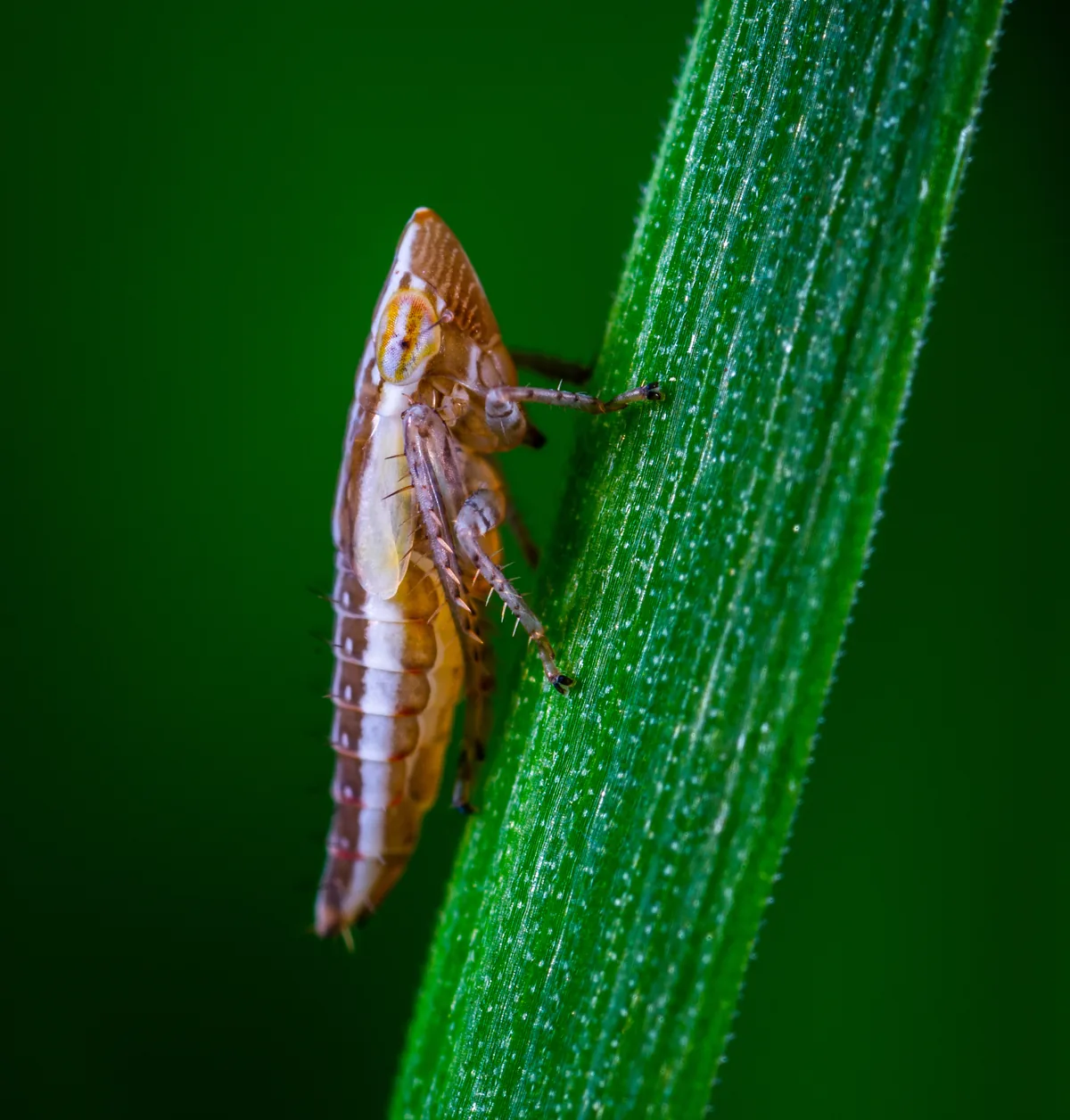
Field Identification
If new growth is curling, yellowing, sticky, or chewed, leafhoppers may already be on the plant. This pest often builds quietly, then damage appears all at once. Feeding stress weakens growth, reduces yield, and opens the door to secondary disease. Early cleanup is much easier than fighting a full population surge later.
Inspect the newest growth first: leaf undersides, flower buds, stem joints, and tender tips where pests gather. Look for body shape, color, eggs, cast skins, honeydew, webbing, or fresh puncture marks. A hand lens and a white paper tap test help reveal small life stages. Matching visible pests with fresh plant damage confirms active infestation.
Not sure what you have? Use the symptom diagnosis tool →
How to Deal With It
Organic Control Methods
Spiders are the most important generalist predator of leafhoppers — a diverse spider community in permanent ground cover and mulch paths provides continuous population suppression. Parasitic wasps (Anagrus spp.) specifically parasitize leafhopper eggs and are the key biological control agent in vineyards and orchards — they thrive when flowering plants like blackberries and wild fennel are nearby. Assassin bugs, damsel bugs, and minute pirate bugs eat leafhopper nymphs. Avoid broad-spectrum sprays that collapse the beneficial insect community and cause leafhopper population rebounds.
Leafhoppers pierce plant tissue and remove sap, causing stippling, yellowing, and browning from leaf edges inward — called hopperburn. They also vector serious diseases including beet curly top virus, aster yellows, and Pierce's disease of grapes. Reflective silver mulch under susceptible crops disorients leafhoppers significantly. Yellow and white sticky traps monitor populations. Adults jump quickly when disturbed — approach plants slowly when scouting.
Remove weedy vegetation near gardens in late summer when leafhoppers are migrating to new hosts — tall weeds along field edges are major leafhopper reservoirs. Interplant with aromatic herbs at bed edges to confuse navigation. Avoid excess nitrogen which produces succulent soft growth leafhoppers prefer. Keep diverse permanent plantings including flowering perennials that support parasitic wasp populations year-round.
Yellow and white sticky traps at plant height catch adults for monitoring and modest reduction. A strong water spray dislodges nymphs from leaf undersides — repeat every 2-3 days. Row covers over susceptible crops before leafhopper pressure builds prevent establishment. Kaolin clay on leaf surfaces deters feeding and landing — more effective as a preventive coating than as a reactive spray after infestation.
Insecticidal soap kills nymphs on direct contact — coat leaf undersides thoroughly where nymphs feed. Apply every 3-5 days during peak pressure. Neem oil disrupts leafhopper feeding and reproduction — apply weekly as prevention. Kaolin clay on foliage physically deters landing and feeding. Pyrethrin provides quick knockdown but leafhoppers reinvade ra areas. Avoid spraying during bloom as all these products can harm pollinators on open flowers.
Let Nature Handle It
Natural Enemies
- Spiders
- Lacewings
- Parasitic Wasps
- Predatory Bugs
Threat Map