About
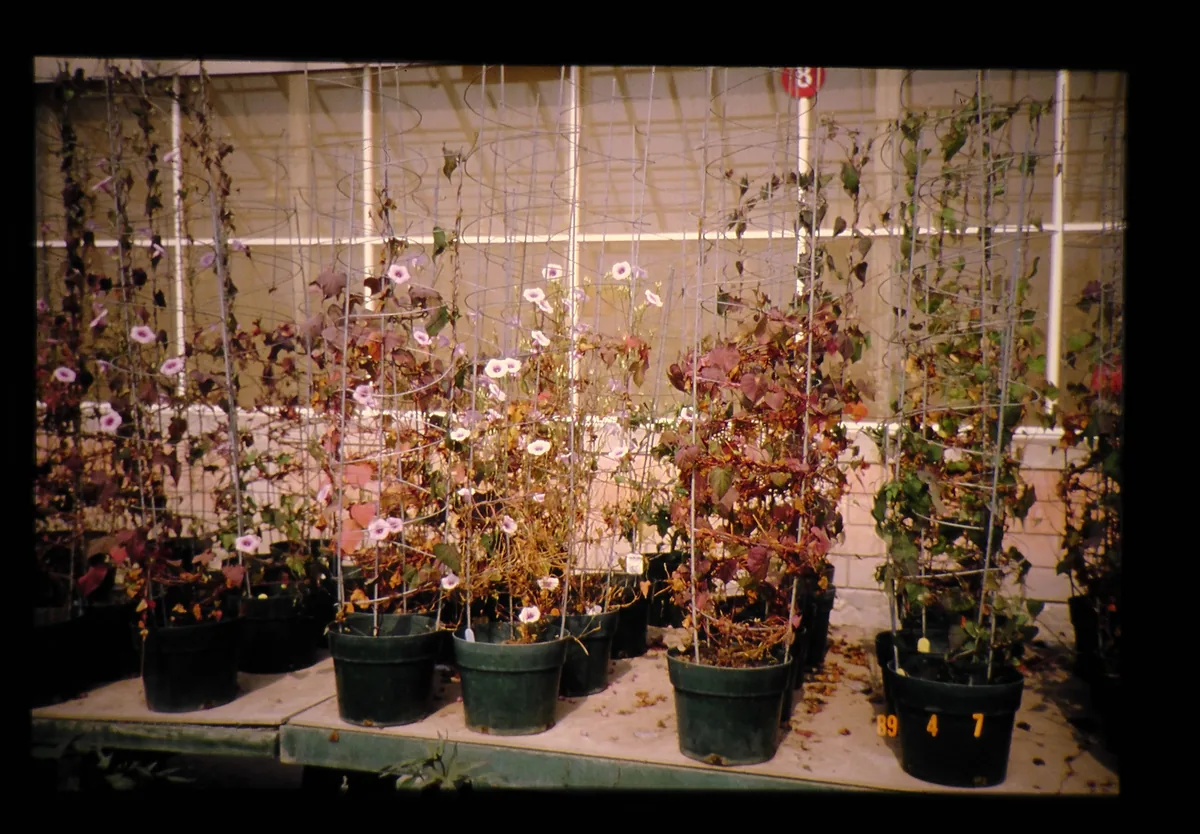
Wild sweet potato (Ipomoea pandurata) is a native eastern North American perennial vine with heart-shaped leaves and big white morning-glory blooms striped red-purple in the throat. It climbs fences and shrubs via twining stems and forms a massive underground storage root over time—edible history exists, but modern foragers should verify identity, land permissions, and preparation because look-alikes in Ipomoea are not all friendly. In subtropical and tropical Americas it grows vigorously in warm months; manage it like a native vine with boundaries. Full sun to light shade; blooms more in sun. Average soil moisture; tolerates summer humidity but rots in constantly soggy low spots. Provide a trellis, dead tree, or tolerant shrub—do not unleash on delicate perennials without a plan. Sow scarified seed after frost danger in spring; nick seed coat carefully to improve soak. Root cuttings from young root pieces are possible but slow—mostly a curiosity. Easiest expansion is allowing established plants to resprout from root crown; transplant dormant pieces with caution and labels. If pursuing roots, harvest from known patches in dormant season with landowner consent and expert ID. Otherwise treat as erosion-stabilizing ground cover and pollinator vine—clip back before it smothers unwilling hosts.
Permaculture Functions
- Edible: Ipomoea pandurata massive roots can weigh 10+ kg -- historical use exists; modern eating needs landowner permission, certain ID versus toxic morning glories, and cooking knowledge.
- Ground Cover: Heart-shaped leaves laminate trellises and banks July through frost -- clip back if smothering planted shrubs.
- Wildlife Attractor: Big white morning-glory trumpets feed sphinx moths at night -- native bee guilds visit by day.
- Erosion Control: Deep tuber anchors sand cuts -- twining stems knit surface before perennial grasses establish.
Companion Planting
Also mentioned as companions:
- Corn
Not yet profiled in PermiePortal
Threats & Pressure