About
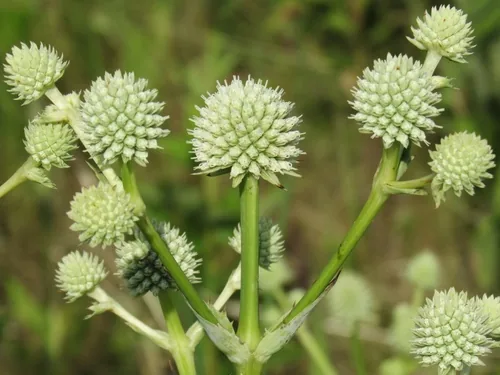
Rattlesnake master (Eryngium yuccifolium) is a striking prairie perennial of central and eastern North America with yucca-like leaves and spherical white flower heads that hum with insect life. Deep taproots punch through tough soils where shallow-rooted perennials stall. It belongs in meadow plantings, bioswale berms, and pollinator strips that refuse to look like bedding annuals. Full sun; shade causes weak floppy stems. Drought tolerant once established; still benefits from occasional deep watering in sand. Well-drained to mesic soils; tolerates clay if winter wet does not rot crowns. Seeds: cold moist stratify; germination improves after winter. Root cuttings from young plants; older taproots resent disturbance. Transplant small seedlings; mature plants sulk if moved casually. Roots historically appear in herbal literature—modern use belongs to trained practitioners. Leave most flower heads for pollinators; collect seed when spheres brown and detach easily. Cut old stems in late winter to leave hollow stalks for cavity-nesting insects.
Permaculture Functions
- Edible: Eryngium yuccifolium young leaf hearts and roots appear in sparse Indigenous food records with heavy caution because Apiaceae confusion kills -- treat public plantings as wildlife architecture, not brunch foraging unless ID skills are courtroom-grade.
- Pollinator: White spherical umbels swarm with native bees, predatory wasps, soldier beetles, and rare pollinators during high-summer dearth -- fragrance reads honey-mild; sit upwind if you like perfume with your morning coffee.
- Wildlife Attractor: Spiny seed heads feed goldfinches; hollow stems shelter small overwintering bees if you delay mowing until spring -- leave random stalks for honest insect hotel texture along meadow margins.
- Ornamental: Yucca-like rosettes and silvery bracted balls sell modern prairie plantings and bioswale berms -- deep taproot laughs at drought once established where wet winter clay does not rot crowns.
Companion Planting
Threats & Pressure