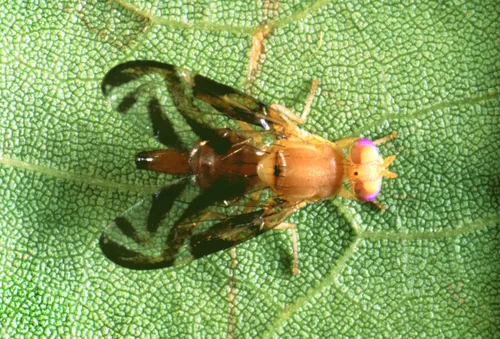
Field Identification
If leaves show trails, fruit turns soft, or roots collapse from inside, caribbean fruit fly may already be feeding. The larval stage does most of the damage, often hidden where you cannot see it at first glance. By the time yellowing or rot appears, feeding may be well underway. Move quickly when symptoms begin to prevent another wave of eggs and larvae.
Watch for tiny eggs near plant tissue, pale legless larvae inside mines or fruit, and sudden soft spots or tunnels. Adults are usually small flies that hover or dart when disturbed. Check around wounds, blossoms, and moist plant debris where egg-laying is common. Cut open suspect tissue: live maggots or fresh tunnels are the clearest field confirmation.
Not sure what you have? Use the symptom diagnosis tool →
How to Deal With It
Organic Control Methods
Sterile insect technique runs at area-wide scale with regulators -- not a home garden lever. Braconid parasitoids attack larvae in some systems when sanitation and bait sprays spare beneficials. Predatory ants harass larvae in fallen fruit; they are not a program alone. Coordinate with agriculture agencies when releases or SIT operate in your region.
Follow regional trapping guidelines; traps tell you when females are searching for fruit. Harvest at proper maturity and strip trees of leftover fruit weekly -- ground fruit is a pupation factory. Bag high-value clusters when labor allows; exclusion beats hope.
Clean orchard floors daily during fly weeks; one forgotten mango perfumes the block. Host- free periods may be required by law -- take them seriously. Plant early varieties that mature before peak fly if local climate allows.
Fine mesh enclosures around small trees exclude females when every seam seals -- vent for wind loading. Fruit bagging on individual clusters works on backyard scales. Heat treatment of fruit for trade follows certified protocols only.
Bait sprays mix protein hydrolysate with spinosad or other approved actives on spot trees -- attracts feeding adults without fogging whole canopy. Follow local extension recipes and organic certification rules. Reapply after rain per program. Bait sprays complement sanitation, not replace it.
Let Nature Handle It
Natural Enemies
- Parasitic Wasps
- Predatory Ants
Threat Map